How Much Does Paint Correction Cost for a Car?
Paint correction costs depend on the vehicle’s size, paint condition, clear-coat characteristics, and the polishing stages needed for safe results. We typically see pricing start at $300–$600 for a light enhancement. One-step correction often ranges from $600–$1,000+. Multi-stage work can reach $1,000–$2,000+ for larger vehicles or finishes with heavy damage.
Key Takeaways
- Labor time, paint condition, vehicle size, and clear-coat safety drive paint correction pricing.
- Enhancement polishing boosts gloss and reduces light haze. One-step and multi-stage correction remove increasingly visible defects.
- Paint correction can reduce swirls, wash marring, oxidation, and light scratches. Deep scratches, chips, and failed clear coat may need repair or repainting.
- Ceramic coating doesn’t remove defects. It protects a corrected finish and makes routine washing easier, but we don’t require it after correction.
- An in-person paint inspection gives us the most accurate quote. It also helps us match the correction level to the vehicle’s condition, use, and our desired results.
How Much Does Paint Correction Cost by Service Level?
When drivers ask, “how much does paint correction cost,” the answer depends largely on how much correction the paint needs.
Not every vehicle requires aggressive polishing. Some cars only need a light enhancement to improve gloss. Others may require several polishing stages to reduce deeper defects.
Paint Enhancement
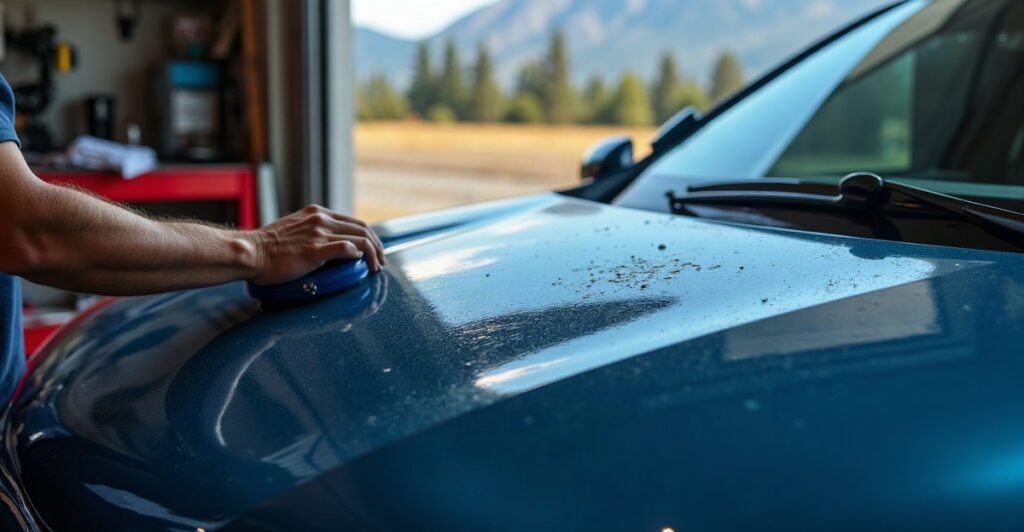
A paint enhancement is usually the most affordable option.
It focuses on improving gloss and reducing light haze, minor wash marks, and small imperfections. It is often suitable for newer vehicles or cars with relatively healthy paint.
Pricing may begin around $300–$600, depending on the vehicle and condition.
One-Step Paint Correction
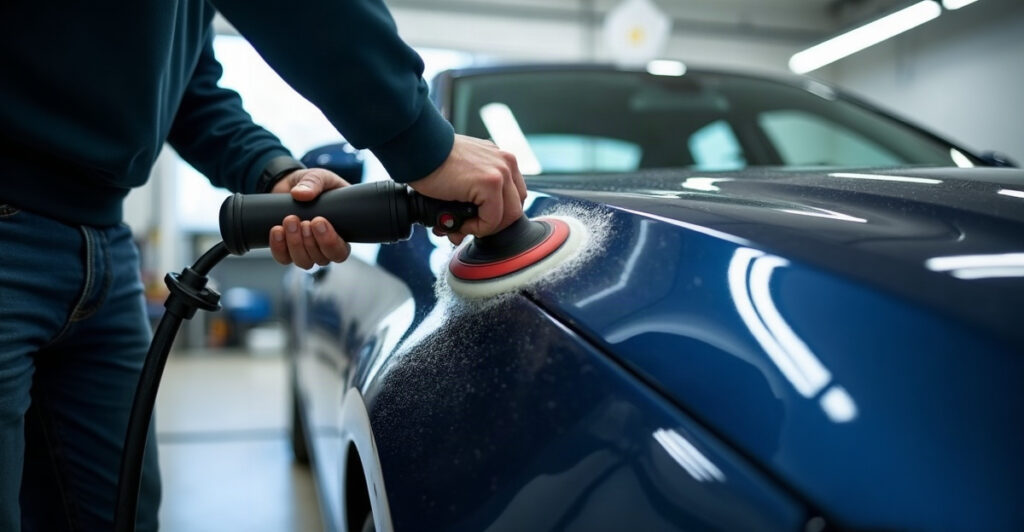
One-step correction uses a polishing process designed to provide a stronger improvement than a basic enhancement.
It can reduce moderate swirl marks, light scratches, oxidation, and wash-related defects while improving clarity.
One-step work often falls around $600–$1,000 or more.
Professional paint correction should always balance defect removal with clear-coat preservation. Removing more paint than necessary is not the goal.
Multi-Stage Paint Correction
Multi-stage correction is more intensive.
It may involve an initial cutting stage followed by one or more polishing stages. This approach is often used when a finish has deeper swirls, oxidation, sanding marks, or more visible imperfections.
Pricing can reach $1,000–$2,000 or more depending on labor, vehicle size, paint condition, and desired results.
What Factors Affect Paint Correction Cost?
There is no reliable flat price for every vehicle because several factors influence the amount of work required.
Vehicle Size
A compact car has less paint surface than a full-size SUV, truck, or recreational vehicle.
Larger vehicles require more time for washing, decontamination, masking, polishing, inspection, and finishing.
This is why a large SUV can cost more to correct even when its paint condition is similar to a smaller car.
Owners of larger vehicles may also want to explore truck and SUV coating after correction if they want additional protection.
Paint Condition
Paint condition has one of the biggest effects on cost.
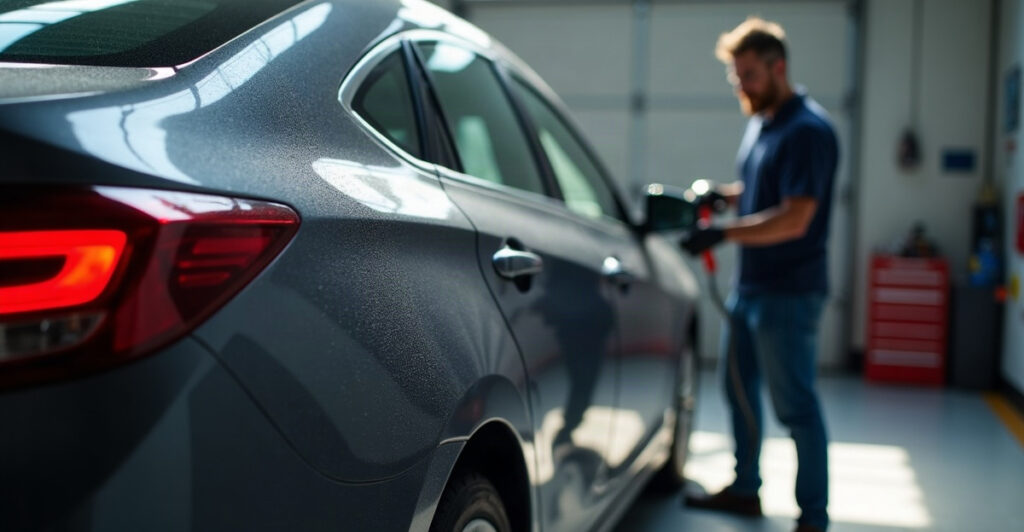
A lightly used vehicle with mild swirl marks may need only a simple enhancement. A vehicle exposed to years of poor washing, automatic car washes, oxidation, or environmental contamination can require significantly more work.
We look for defects such as:
- Swirl marks
- Fine scratches
- Water spots
- Oxidation
- Wash marring
- Etching
- Haze
- Previous polishing marks
The more severe and widespread the defects are, the more time correction usually requires.
Paint Hardness and Clear-Coat Characteristics
Automotive paint systems do not all respond the same way to polishing.
Some clear coats are relatively soft and can show defects easily. Others are harder and may require more polishing time to achieve the desired correction.
A test area helps determine which polishing combination provides a good result without removing unnecessary clear coat.
Previous Paintwork
Repainted panels may behave differently from factory paint.
A vehicle may also have panels with different paint thicknesses due to previous body repairs.
These differences matter because correction must remain within safe limits.
What Does Paint Correction Actually Remove?
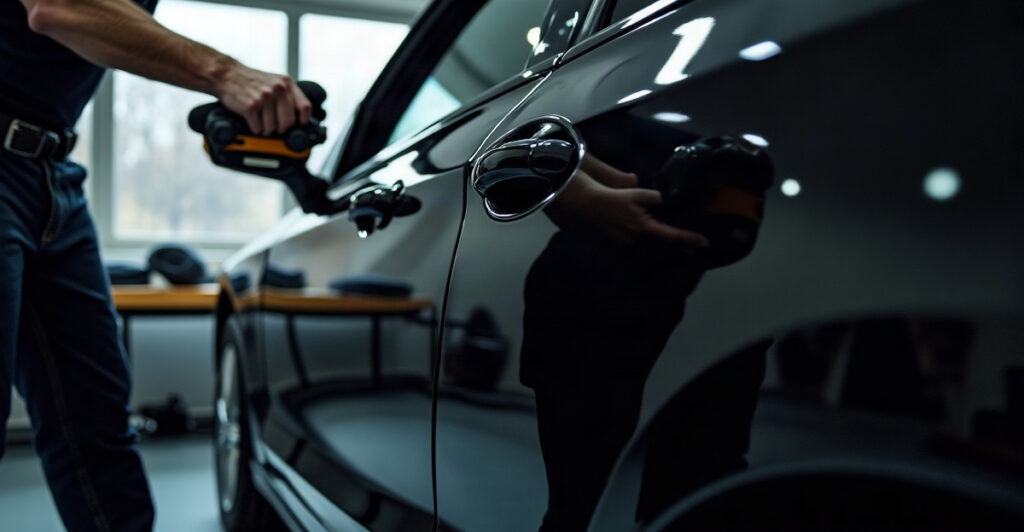
Paint correction works by polishing a very small amount of the outer paint surface to reduce visible defects.
It can often improve:
- Swirl marks
- Light scratches
- Holograms
- Oxidation
- Mild water spotting
- Wash-related haze
- Light etching
However, paint correction cannot fix every type of damage.
A scratch that has penetrated through the clear coat may remain visible. Stone chips, peeling clear coat, cracking paint, rust, and major body damage generally require other repair methods.
A good correction plan aims for meaningful improvement without chasing defects that would require unsafe levels of clear-coat removal.
Why Does Paint Correction Take So Long?
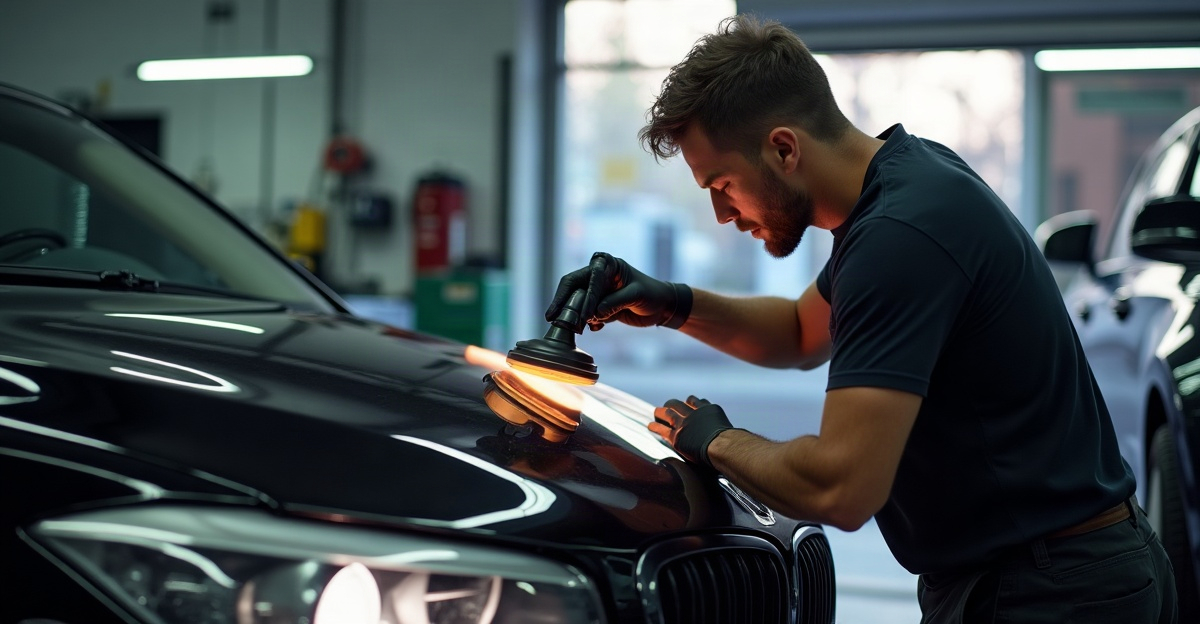
Paint correction is labor-intensive because polishing is only one part of the process.
Before correction begins, the vehicle usually needs careful cleaning and preparation.
A typical process may include:
- Thorough exterior washing
- Chemical decontamination
- Mechanical decontamination when needed
- Drying and inspection
- Masking sensitive trim
- Paint testing
- Machine polishing
- Panel inspection
- Final cleaning and protection
Lighting also plays an important role. Proper inspection lighting helps reveal defects that may be difficult to see outdoors or under normal garage lights.
At All In Ceramic Coating, the correction level can be matched to the paint condition rather than using the same polishing process on every vehicle.
Is Paint Correction Worth the Cost?
Paint correction can be worthwhile for owners who want to improve the appearance of their vehicle without repainting otherwise healthy panels.
A corrected finish can appear deeper, clearer, and more reflective because many surface defects no longer scatter light across the paint.
It can make sense before:
- Applying ceramic protection
- Preparing a vehicle for a show
- Improving an older vehicle’s appearance
- Correcting poor previous detailing
- Preparing a special or enthusiast vehicle
- Protecting a newly purchased car
Whether it is worth the investment depends on the condition of the vehicle and the level of finish you expect.
Should You Get Ceramic Coating After Paint Correction?
Ceramic coating is optional, but correction and coating often work well together.
Paint correction improves the surface. Ceramic coating helps protect that corrected finish from routine environmental exposure and makes washing easier.
Our auto ceramic coating options can be applied after the paint has been properly prepared.
A coating does not hide or remove existing swirl marks. Applying one over damaged paint can lock in the appearance of those defects until the coating is removed.
That is why inspection and preparation should come first.
Does Paint Correction Cost More for Specialty Vehicles?
It can.
Motorcycles, boats, RVs, and other vehicles have different shapes, materials, access points, and surface areas.
A motorcycle may have less total painted area than a car, but curved panels and tight spaces can require detailed polishing.
Owners looking to protect motorcycles or marine surfaces can learn more about motorcycle and watercraft coating.
Large recreational vehicles require an entirely different level of labor because of their surface area. Our RV and recreational coating services address the protection needs of these larger vehicles.
How Can You Get an Accurate Paint Correction Quote?
The best way to determine how much paint correction costs for your car is to have the paint inspected.
Photos can provide a general idea, but lighting can hide defects. An in-person inspection allows us to see the actual condition of the finish.
We can evaluate:
- Vehicle size
- Swirl severity
- Scratch depth
- Oxidation
- Water spotting
- Previous paint repairs
- Desired correction level
- Areas requiring additional attention
From there, we can recommend an enhancement, one-step correction, or multi-stage process.
You do not always need the most aggressive option. The right service should match your vehicle, expectations, and budget.
Frequently Asked Questions
How Much Does Paint Correction Cost on Average?
Paint correction can start around $300–$600 for a light enhancement. One-step correction may cost $600–$1,000 or more, while multi-stage correction can reach $1,000–$2,000+. Final pricing depends on vehicle size, paint condition, and labor.
How Long Does Paint Correction Take?
A basic enhancement may take several hours. More involved correction can take a full day or longer. Multi-stage work on large or heavily damaged vehicles may require additional time because each panel must be corrected and inspected carefully.
Will Paint Correction Remove All Scratches?
No. Paint correction can reduce many light and moderate surface scratches, but deep scratches that penetrate the clear coat may require touch-up work or repainting. Safe clear-coat preservation should take priority over removing every visible mark.
Do I Need Ceramic Coating After Paint Correction?
No. Ceramic coating is not required after paint correction. However, it can help protect the corrected finish and make routine cleaning easier. Wax, sealants, and other protection methods may also be used depending on your goals.
How Often Should Paint Correction Be Done?
Paint correction should not be treated as routine maintenance because polishing removes a small amount of clear coat. Good washing methods and proper protection can help reduce the need for repeated correction.
Get a Paint Correction Quote From All In Ceramic Coating
So, how much does paint correction cost? For most vehicles, pricing depends on how much polishing is needed to achieve a safe and noticeable improvement.
All In Ceramic Coating evaluates the condition of the paint before recommending a correction level. That helps us avoid unnecessary polishing while focusing on the defects that matter most.
If you are considering paint correction or want to know which service fits your vehicle, contact us to schedule an inspection and discuss your options.