Car Paint Fading: What Causes It and Can It Be Fixed?
Car paint can fade after UV exposure, oxidation, contamination, improper washing, and clear-coat deterioration. We determine the right repair by checking whether damage remains on the surface or has progressed to paint failure. Paint correction can improve oxidation, haze, swirls, and light defects when sound clear coat remains. Peeling, cracking, or flaking clear coat usually requires repainting.
Key Takeaways
- Surface oxidation and light defects often improve with washing, decontamination, and careful paint correction.
- Peeling, cracking, delamination, and exposed base coat signal clear-coat failure. Polishing and ceramic coating can’t repair this damage.
- Ceramic coating protects properly prepared paint and simplifies maintenance. It can’t replace missing clear coat or restore failed paint.
- Strong sun, winter brine, gravel roads, contamination, and temperature swings can speed up fading in Idaho and Wyoming.
- A paint inspection helps us identify whether maintenance, correction, ceramic coating, or repainting offers the most practical next step.
Can Faded Car Paint Be Restored?
Car paint fading can often be improved when the issue involves surface oxidation, dullness, light scratches, swirl marks, or embedded contamination and enough clear coat remains. Paint correction can restore clarity and gloss in many cases, but it cannot permanently repair missing, peeling, cracked, or delaminated clear coat.
The key is identifying whether faded car paint has a recoverable surface issue or permanent paint failure. We inspect the finish before recommending polishing, coating, or repainting car paint. Results vary based on paint condition, remaining clear-coat thickness, prior repairs, color, vehicle age, exposure history, and the extent of permanent damage. We do not promise a like-new result when the paint has already failed.
| Paint Condition | Likely Cause | Can Paint Correction Help? | Can Ceramic Coating Help? | When Repainting May Be Needed |
|---|---|---|---|---|
| Mild dullness or oxidation | UV exposure, road film, contamination, neglected washing | Often. Washing, decontamination, polishing, and correction may restore significant gloss. | Yes, after preparation. It can protect the improved finish. | Usually not needed if clear coat remains healthy. |
| Moderate oxidation and light defects | Sun exposure, swirl marks, light scratches, chemical residue | Often produces meaningful improvement, depending on clear-coat condition. | Yes, after correction, to support easier maintenance and added protection. | May be needed if clear coat is too thin or damage is permanent. |
| Severe oxidation or thin paint | Long-term UV exposure, age, prior polishing, poor maintenance | Possibly, but results may be limited. Aggressive polishing adds risk. | It can protect remaining sound paint but cannot restore lost material. | Often appropriate if polishing cannot safely improve the finish. |
| Peeling, cracking, flaking, or failed clear coat | Clear-coat deterioration, weathering, age, poor repainting | No lasting repair. Polishing may worsen the appearance. | No. Coating will not repair failed paint. | Generally needed for a durable repair. |
For recoverable paint fading on a car, professional paint correction can make a major visual difference. For failed finishes, repainting is the honest long-term answer.
How to Tell Whether Paint Is Oxidized or the Clear Coat Has Failed
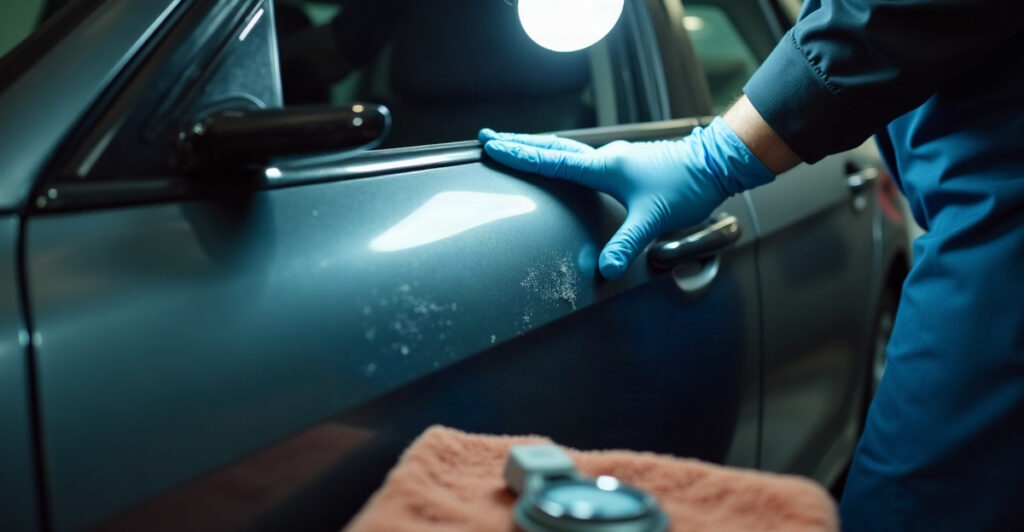
Not every dull car paint surface has the same problem. Dirt, mineral deposits, bonded fallout, tree sap, and road film can hide the true condition of the finish. A proper wash and decontamination process often reveals whether the paint is simply dirty, oxidized, scratched, or permanently damaged.
Surface oxidation usually appears as reduced reflection, uneven gloss, a chalky look, or a finish that seems dry and faded. The paint may look noticeably better after cleaning, yet still lack depth and clarity. This type of car paint oxidation may respond well to polishing if enough sound clear coat remains.
Embedded contamination creates a rough feel even after washing. Swirl marks and light scratches scatter light across the surface, making paint look faded even if the color itself remains intact. In many cases, learning how paint correction works helps clarify why these defects can often be reduced.
Clear-coat failure is different. Common warning signs include peeling edges, cloudy or white patches, cracking, flaking, delamination, and exposed base coat. A faded clear coat may also polish unevenly or show no meaningful improvement after a test section. Peeling clear coat cannot be bonded back into place with polish, wax, or ceramic coating.
Older paint, factory paint quality, previous bodywork, vehicle age, storage conditions, and regional exposure all affect the outcome. Fading does not always mean the vehicle was neglected. Some finishes simply endure harsher conditions or have prior repair history that limits safe correction.
What Causes Car Paint Fading?
UV exposure is a primary cause of car paint fading. Sunlight gradually breaks down the clear coat and pigment, reducing gloss and color depth over time. Red, black, blue, and darker finishes can make fading more noticeable, but every paint color can suffer UV damage.
Oxidation on car paint develops through prolonged exposure to oxygen, sunlight, moisture, and contaminants. The result may look chalky, dry, faded, or uneven. Weather damage to car paint often starts slowly, then becomes more obvious after years of outdoor parking.
Environmental contamination also contributes to fading paint on a car. Bird droppings, bug residue, tree sap, fuel spills, road grime, industrial fallout, mineral deposits, and water spots can stain or etch the clear coat. Left in place, these materials can create permanent damage.
Improper washing adds another layer of wear. Automatic brush washes can create swirl marks and reduce gloss. Dirty wash mitts, harsh chemicals, and dry wiping can also scratch paint and make a finish look older than it is.
Clear-coat deterioration may also result from age, chemical exposure, prior repairs, poor-quality repainting, or bodywork. In Eastern Idaho and Western Wyoming, intense high-elevation sun, long outdoor parking periods, snow and ice, winter road salt and brine, mud and gravel roads, windblown debris, water spots, outdoor recreation use, and seasonal temperature swings can accelerate fading and oxidation. Reliable Idaho car paint protection and Wyoming car paint protection start with matching the service to the actual paint condition.
What Paint Correction Can and Cannot Fix
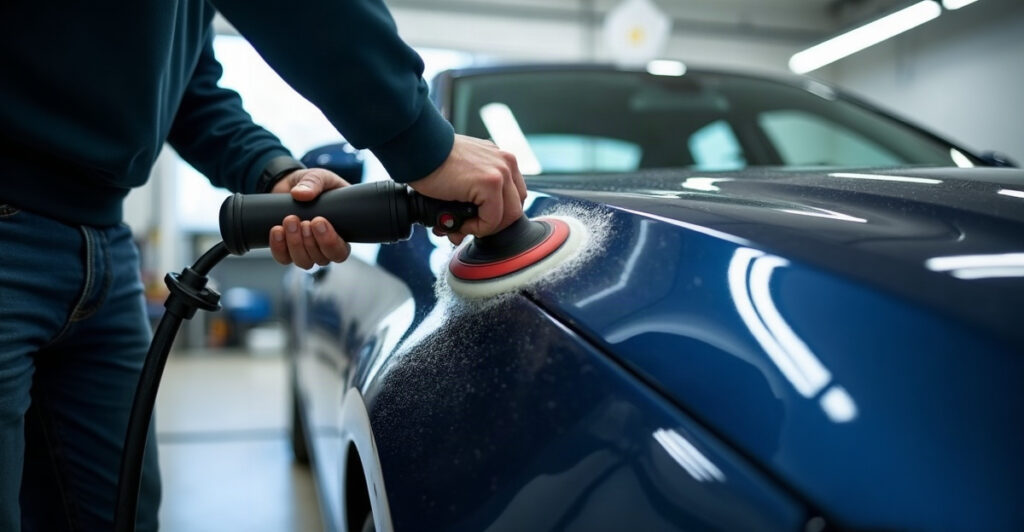
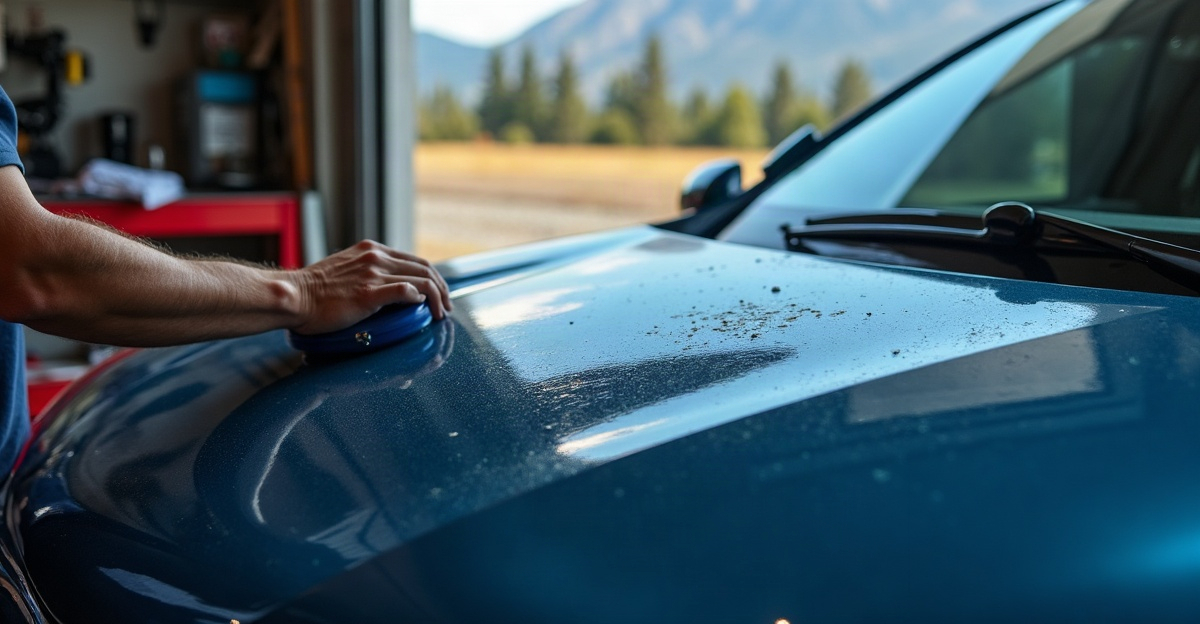
Paint correction is a polishing process that levels a very small amount of clear coat to reduce oxidation, haze, swirls, and certain surface defects. It is not paint replacement. Proper paint correction for faded paint can substantially improve a vehicle, but the result depends on paint thickness, prior repairs, and the severity of UV or chemical damage.
We begin by inspecting the finish, washing and decontaminating the surface, and checking for peeling, cracking, or uneven previous repairs. When appropriate, we also evaluate clear-coat thickness before selecting a polishing approach. This process helps us avoid unnecessary risk on thin or compromised paint.
Can paint correction fix faded paint? Often, yes, if fading comes from oxidation, contamination, light scratches, or surface haze. Paint correction benefits are most noticeable when the clear coat remains intact and can be safely refined.
Polishing oxidized car paint requires restraint. Repeated polishing, harsh compounds, or poor machine technique can create uneven results or damage thin paint. We recommend starting with proper washing and decontamination, then using the least aggressive method that achieves a useful improvement.
If the clear coat is peeling, cracking, delaminating, or worn through, polishing is not a lasting repair. In that situation, repainting may be the most practical option. A clear explanation up front helps prevent spending money on correction that cannot deliver the result the paint condition allows.
Where Ceramic Coating Fits In After Paint Restoration
Ceramic coating is a protective layer applied after proper preparation, often after paint correction. It can enhance gloss, make routine washing easier, and help reduce the impact of UV exposure, environmental contaminants, and routine maintenance-related wear.
Ceramic coating for faded paint does not fix the fading itself. It protects the prepared surface and can make corrected paint look richer and glossier, but it does not replace clear coat, fill deep scratches, reverse severe oxidation, or repair peeling and flaking. Will ceramic coating restore faded paint with clear-coat failure? No. Repainting remains the durable repair for failed paint.
A properly prepared ceramic coating service works best on paint that is healthy or has first been corrected. Durability varies based on coating type, preparation quality, storage, driving conditions, weather exposure, washing habits, and coating maintenance. Protection reduces wear, but it does not eliminate the need for regular washing.
For a clear comparison of protection options, wax versus ceramic coating can help define which choice fits the vehicle’s condition and expected use. Ceramic coating after paint correction is often an excellent long-term maintenance choice, while paint protection film may be worth considering for high-impact areas that face gravel, debris, and road wear.
How to Prevent Further Paint Fading and Choose the Right Next Step
Preventing further paint fading starts with consistent car paint maintenance. Healthy paint needs regular care, while oxidized paint needs an assessment before anyone reaches for aggressive polish or a coating product.
For practical protection, we recommend the following steps:
- Wash regularly with pH-appropriate automotive products and clean wash media.
- Remove bird droppings, bug residue, tree sap, fuel spills, and road grime promptly.
- Avoid automatic brush washes when possible because they can add swirls and dull the finish.
- Use covered parking, a garage, or a quality vehicle cover when practical.
- Decontaminate paint periodically to remove bonded fallout, mineral deposits, and embedded contamination.
- Apply wax, sealant, paint protection film, or ceramic coating based on paint condition and ownership goals.
- Maintain coatings correctly, since protection does not replace washing.
The right next step depends on the actual condition of the paint. Maintenance suits healthy paint. Correction suits recoverable oxidation and light defects. Coating protects prepared paint. Repainting is usually the realistic answer for failed clear coat.
Car paint fading in Idaho and Wyoming often develops faster due to strong sun, winter brine, gravel roads, and temperature swings. To protect car paint from sun and seasonal exposure, regular washing and sensible protection make a meaningful difference.
If there is uncertainty about whether paint is oxidized or the clear coat has failed, a professional paint evaluation can identify the most practical option before money is spent on polishing, coating, or repainting. We can assess the vehicle and explain whether paint correction, ceramic coating, maintenance, or repainting offers the most realistic path. Request a paint evaluation with All In Ceramic Coating for a clear recommendation based on the condition of the finish.