What Is Paint Correction on a Car and How Does It Work?
Paint correction is a controlled polishing process that levels minor clear-coat imperfections. We improve gloss, clarity, depth, and reflection without repainting the vehicle.
We inspect the paint, remove bonded contaminants, perform test spots, and use the least aggressive polishing method that delivers a safe, realistic result.
Key Takeaways
- Paint correction treats surface defects, including swirl marks, wash marring, light scratches, haze, dullness, and mild oxidation, if the clear coat has enough material.
- The process removes a small amount of clear coat. We assess paint condition, thickness, prior repairs, and defect severity before selecting a correction method.
- Deep scratches, rock chips, peeling clear coat, dents, and damage below the clear coat need touch-up paint, repainting, dent repair, or body-shop service.
- Wax and glaze can temporarily hide minor defects. Paint correction physically refines the clear-coat surface.
- A ceramic coating won’t correct existing defects. It can protect a corrected finish and make routine cleaning easier.
What Is Paint Correction on a Car?
If you are wondering what is paint correction on a car, it is a professional polishing process designed to improve the surface of automotive paint.
Modern vehicle paint usually includes several layers. These may include primer, color coat, and a clear coat. Most minor defects that make paint look dull or scratched are located within the upper portion of the clear coat.
Paint correction carefully refines this surface.
Instead of simply covering defects, polishing reduces the uneven edges around them. This allows light to reflect more evenly from the paint.
The result can be:
- Better gloss
- Clearer reflections
- Improved paint depth
- Reduced swirl marks
- Reduced light scratches
- A smoother overall appearance
Professional paint correction should focus on improving the finish while preserving as much clear coat as possible.
What Types of Paint Defects Can Be Corrected?
Paint correction works best on defects located within the clear coat.
Some of the most common problems include swirl marks, washing damage, minor scratches, oxidation, and polishing haze.
Swirl Marks
Swirl marks are fine scratches that often appear as circular patterns under direct sunlight or bright inspection lights.
They can develop from:
- Automatic car washes
- Dirty wash mitts
- Dry wiping
- Improper towels
- Poor washing techniques
Paint correction can often reduce or remove these marks when they remain within the clear coat.
Light Scratches and Wash Marring
Wash marring includes fine scratches created during improper washing or drying.
These defects may make a dark-colored vehicle look hazy or dull.
Correction can smooth the affected surface and improve reflection.
Oxidation and Dull Paint
Sun exposure and environmental conditions can gradually make paint appear faded or cloudy.
Light oxidation may respond well to polishing.
However, severe oxidation or failed clear coat may require repainting instead.
Holograms and Previous Polishing Marks
Improper machine polishing can leave visible trails or holograms in the paint.
These marks are especially noticeable in direct sunlight.
A proper correction process can refine the surface and restore a more uniform finish.
What Paint Correction Cannot Fix
Paint correction has limits.
It is not a replacement for body repair or repainting. Some defects extend too deeply into the paint system to be removed safely.
Paint correction generally cannot fully repair:
- Deep scratches through the clear coat
- Rock chips
- Dents
- Peeling clear coat
- Cracked paint
- Rust
- Severe paint failure
- Damage below the color layer
Trying to polish away a deep scratch can remove too much clear coat.
A professional detailer should prioritize paint safety rather than trying to eliminate every visible defect.
How Does Paint Correction Work?
Paint correction involves several steps before polishing even begins.
At All In Ceramic Coating, the process starts by examining the vehicle and determining what level of correction is appropriate.
Step 1: Paint Inspection
The paint is inspected under proper lighting.
We look for:
- Swirl marks
- Scratches
- Oxidation
- Water spots
- Etching
- Previous repair work
- Holograms
- Uneven paint
This inspection helps determine which areas require additional attention.
Paint Thickness May Also Be Checked
Paint thickness readings can provide useful information about the finish.
A panel with previous body work may have more or less material than surrounding factory panels.
This matters because aggressive polishing may not be appropriate everywhere.
Step 2: Washing and Decontamination
The paint must be clean before polishing begins.
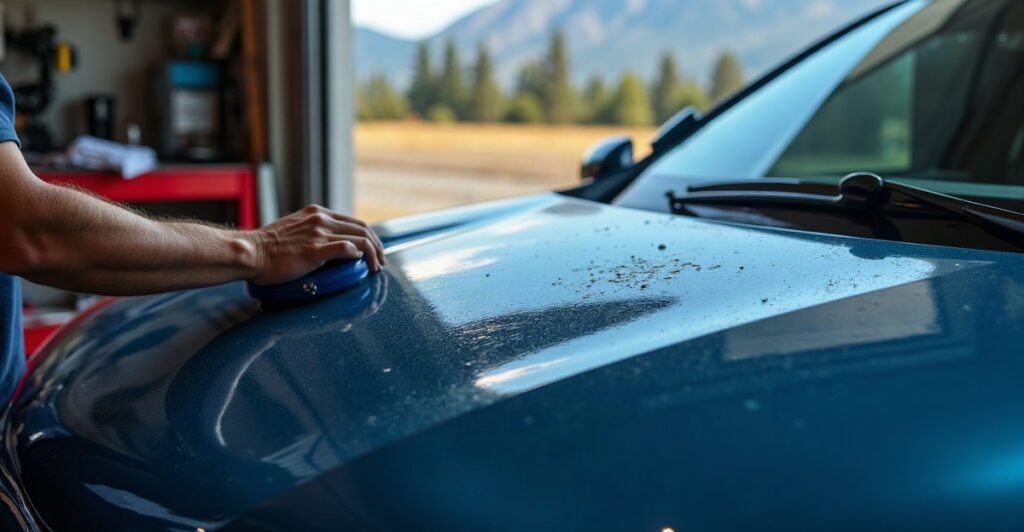
Normal washing removes loose dirt, but bonded contaminants can remain attached to the surface.
These may include:
- Road film
- Industrial fallout
- Tar
- Tree residue
- Brake dust
- Mineral deposits
Chemical and mechanical decontamination can help create a cleaner surface before machine polishing begins.
Step 3: Test Spot
A test spot is one of the most important steps.
Instead of immediately polishing the entire vehicle, we test a small section first.
This helps determine which combination of pad, polish, and machine provides the desired improvement.
The goal is to use the least aggressive method that produces a strong result.
Step 4: Machine Polishing
Once the proper polishing combination is selected, the correction process begins.
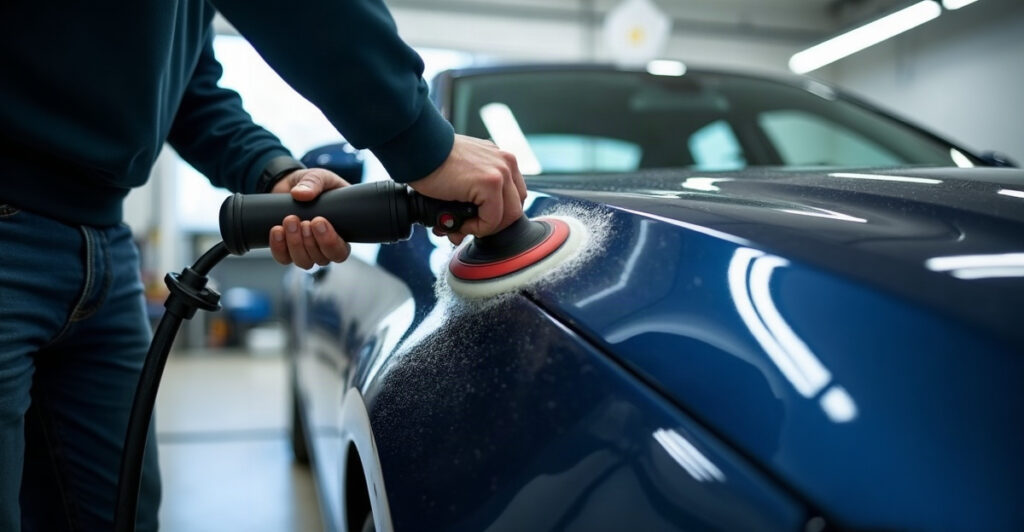
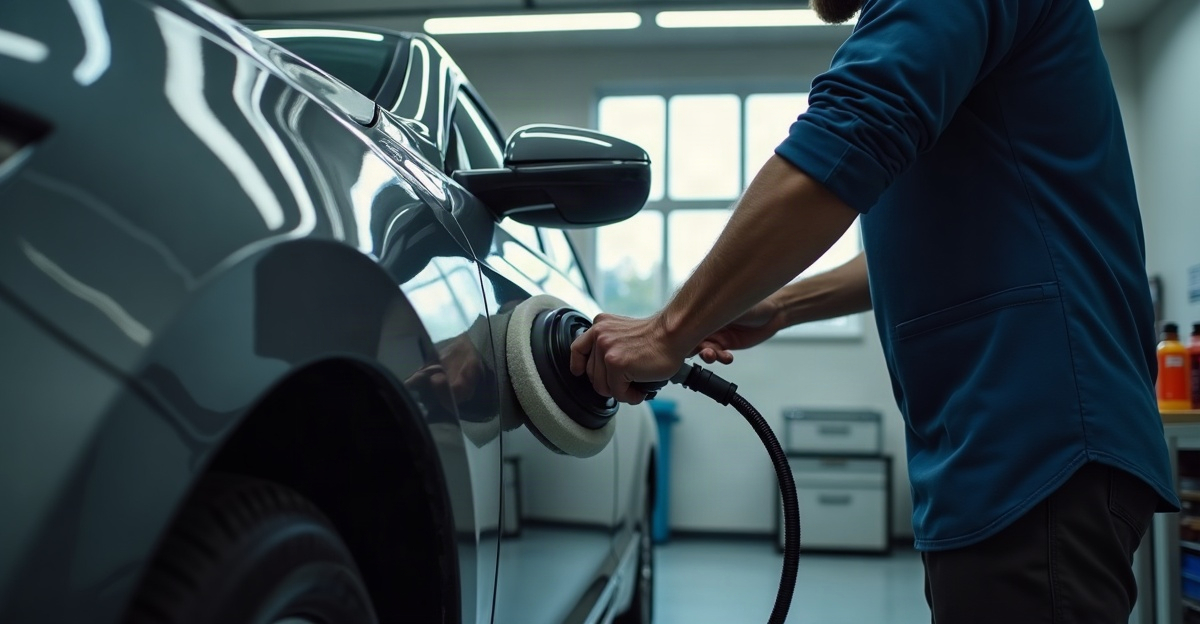
A polishing machine moves a pad across the paint while a specialized compound or polish refines the clear coat.
The process may involve one or more stages depending on paint condition.
One-Step Paint Correction
A one-step correction combines defect removal and finishing into one polishing stage.
It is often suitable for vehicles with moderate swirl marks or light scratches.
The goal is to create a noticeable improvement without performing an aggressive multi-stage process.
Multi-Step Paint Correction
More damaged paint may require multiple stages.
A heavier cutting stage reduces deeper defects. A second polishing stage then improves clarity and gloss.
Multi-step correction requires more labor and should only be used when the paint condition supports it.
How Much Clear Coat Does Paint Correction Remove?
Paint correction removes a very small amount of clear coat.
The exact amount varies based on:
- Polish type
- Pad selection
- Machine
- Paint hardness
- Number of passes
- Defect depth
- Previous correction work
This is why paint correction should not be performed aggressively or unnecessarily.
There is a limited amount of clear coat available.
Removing excessive material can reduce long-term paint protection and increase the risk of damage.
Paint Correction vs Waxing
Waxing and paint correction are very different services.
Wax sits on top of the paint and can improve gloss. Some products may also fill very fine scratches temporarily.
Paint correction changes the actual clear-coat surface.
Wax does not permanently remove swirl marks.
Once the wax wears away, the underlying defects usually remain.
It provides a more permanent visual improvement because it physically refines the affected surface.
Paint Correction vs Ceramic Coating
Paint correction and ceramic coating also serve different purposes.
Correction improves the paint.
Ceramic coating protects the prepared finish.
A coating will not remove swirl marks or scratches already present on the vehicle.
Applying a coating over defective paint can make those defects more difficult to address later because the coating may need to be removed first.
Our auto ceramic coating services can be applied after suitable correction when additional protection is desired.
Do Trucks and SUVs Need Different Paint Correction?
The basic correction process is similar for most vehicles, but size can affect the amount of work required.
Trucks and SUVs often have larger panels and more painted surface area.
Some also include:
- Large hoods
- Tall doors
- Fender flares
- Roof sections
- Complex body lines
These areas can increase inspection and polishing time.
Drivers with larger vehicles may combine correction with truck and SUV coating to help protect the finish afterward.
Can Motorcycles and Watercraft Be Paint Corrected?
Many painted motorcycle and watercraft surfaces can also be polished, but these vehicles require a different approach.
Motorcycles have smaller and more complex panels. Watercraft may use gel coat or other finishes rather than standard automotive clear coat.
Access can also be difficult around tanks, fairings, curves, and trim.
Our motorcycle and watercraft coating options can provide additional protection after the appropriate surface preparation.
What About RV Paint Correction?
RVs may benefit from polishing when the surface develops oxidation, fading, or loss of gloss.
However, their size can make the work much more involved.
Large panels, ladders, rooflines, decals, and different surface materials may all affect the process.
For owners of larger recreational vehicles, RV and recreational coating may help protect a prepared finish after correction.
How Long Does Paint Correction Last?
Paint correction itself does not simply wash away because defects have been physically reduced.
However, new scratches can form afterward.
How long the finish looks corrected depends heavily on how the vehicle is maintained.
To help protect the results:
- Use a clean wash mitt
- Avoid automatic brush washes
- Use proper drying towels
- Remove dirt gently
- Apply suitable paint protection
- Avoid wiping dry paint
- Wash contaminants off promptly
Good maintenance can help prevent new swirl marks and preserve the improved finish.
Is Paint Correction Worth It?
Paint correction can be worthwhile when your vehicle’s paint is healthy but has visible surface defects.
It may be especially useful if you want to improve appearance without repainting.
Correction can also help before applying a coating because it creates a cleaner and more refined finish.
However, not every vehicle requires aggressive polishing.
Some cars need only a light enhancement. Others may benefit from one-step or multi-step correction.
The best approach depends on the actual paint condition and your expectations.
Frequently Asked Questions
Does Paint Correction Remove All Scratches?
No. Paint correction can reduce scratches located within the clear coat. Deep scratches that penetrate the clear coat may require touch-up paint or repainting instead.
Is Paint Correction Permanent?
The defects removed during correction do not return on their own. However, new swirl marks and scratches can develop if the vehicle is washed or maintained improperly.
How Long Does Paint Correction Take?
A light correction may take several hours. More detailed one-step or multi-stage work can require a full day or longer depending on the vehicle’s size and paint condition.
Should I Ceramic Coat My Car After Paint Correction?
Ceramic coating is optional, but it can help protect the corrected finish and make routine cleaning easier. The paint should be properly prepared before the coating is applied.
Can Paint Correction Damage Clear Coat?
Paint correction can damage clear coat if performed too aggressively. Proper inspection, polishing methods, paint measurements, and conservative techniques help reduce this risk.
Improve Your Vehicle’s Finish With All In Ceramic Coating
Understanding what is paint correction on a car can help you decide whether your vehicle needs polishing, protection, or a different type of repair.
Paint correction can dramatically improve gloss and clarity when surface defects remain within a healthy clear coat. The process should always balance appearance with long-term paint preservation.
All In Ceramic Coating evaluates each vehicle before recommending a correction level. We focus on realistic improvement without removing more clear coat than necessary.
If you want to improve your vehicle’s finish or determine whether paint correction is right for you, contact us to discuss your vehicle and available options.