Water Spots on Ceramic Coating: Can They Cause Damage?
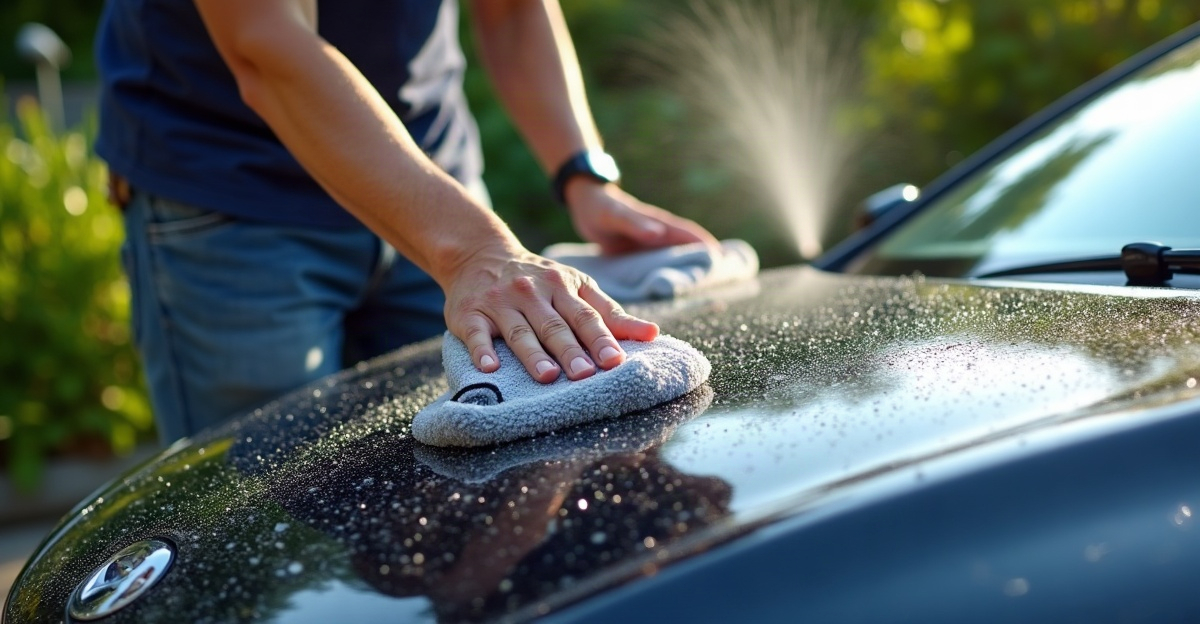
Water spots on ceramic coatings range from removable mineral residue to etched defects. Deposits can affect the coating or clear coat if they sit too long, especially on hot panels. We recommend prompt washing, safe decontamination, and thorough drying. These steps help prevent hard-water and sprinkler deposits from requiring paint correction.
Key Takeaways
- Fresh water spots often consist of surface mineral deposits. We can usually remove them with a coating-safe wash or an approved water-spot remover.
- Bonded deposits and etched spots can remain after washing. We may need professional decontamination, polishing, and coating reapplication.
- Hard water, sprinkler overspray, dusty rain, heat, and extended exposure raise the risk of water-spot damage.
- Reduced water beading doesn’t always indicate coating failure. Contamination can temporarily limit hydrophobic performance.
- We avoid abrasive tools, harsh household cleaners, and untested remedies. Extra care protects matte finishes, PPF, trim, and coated wheels.
Why Water Spots Form on Ceramic-Coated Surfaces
Water spots form when droplets dry and leave minerals or other contaminants behind.
Ceramic coating can make water easier to remove because of its hydrophobic properties, but it does not prevent every droplet from drying on the surface.
When water contains calcium, magnesium, dirt, or other dissolved material, those substances may remain after the water evaporates.
Professional auto ceramic coating can help protect automotive paint from environmental contamination, but proper washing and drying remain important after installation.
Heat Can Make Water Spots More Difficult to Remove
A hot hood, roof, or trunk can cause water to evaporate quickly.
This gives minerals less time to run off the vehicle before they dry on the surface.
Parking near sprinklers on a hot day can be especially problematic because droplets may repeatedly dry on the same panels.
For this reason, washing and drying the vehicle in direct sunlight can also increase the chance of spotting.
Fresh Water Spots Are Often Surface Deposits
Not every visible spot represents permanent damage.
Fresh spots are often mineral residue sitting on top of the coating.
These marks may appear as:
- White rings
- Cloudy circles
- Light streaks
- Dull patches
- Mineral outlines
A proper wash may remove light contamination before it bonds strongly to the surface.
Start With a Coating-Safe Wash
Begin with the least aggressive method.
Wash the vehicle using products and methods suitable for the ceramic coating. Rinse thoroughly and dry the surface rather than allowing water to evaporate naturally.
If ordinary washing does not remove the spots, a coating-safe water-spot remover may be appropriate.
Always follow the product directions and test unfamiliar products carefully before applying them across the vehicle.
Bonded Mineral Deposits Need More Attention
Water spots can become harder to remove when minerals remain on the surface for longer periods.
These deposits may bond more strongly to the coating.
Repeated sprinkler exposure can make the problem worse because each new cycle can add another layer of minerals.
Do Not Scrub Aggressively
It may be tempting to use pressure or abrasive materials when spots remain after washing.
That can create additional defects.
Avoid:
- Abrasive pads
- Rough towels
- Household scouring products
- Strong untested chemicals
- Excessive rubbing
A safer decontamination process should remove the deposits without unnecessarily damaging the coating or paint beneath it.
Can Water Spots Etch a Ceramic Coating?
Yes. In more severe cases, water spots can progress beyond removable residue.
Minerals and contaminants may react with the surface, particularly when exposed to heat for extended periods.
This can leave an etched mark that remains visible even after the mineral deposit is removed.
Etching Can Reach Beyond the Coating
The severity of an etched spot depends on how long the contamination remained, the temperature of the panel, the substance in the water, and the condition of the surface.
Some marks may affect only the coating.
More severe defects can reach the underlying clear coat.
At that point, cleaning alone may not restore the finish.
When Paint Correction May Be Needed
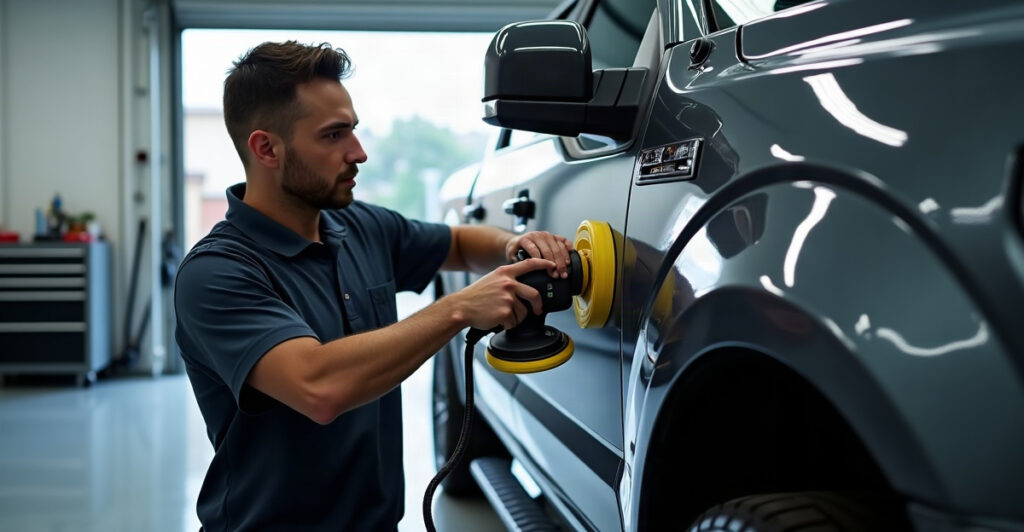
If water spots remain visible after washing and professional decontamination, polishing may be needed.
Professional paint correction can reduce etched defects by carefully leveling the affected surface.
The correct approach depends on whether the damage is in the coating, clear coat, or both.
Polishing Can Affect the Ceramic Coating
Polishing is an abrasive process.
If a coated panel requires polishing, some or all of the ceramic protection on that area may be removed.
The affected section may then need coating preparation and reapplication.
This is one reason early water-spot removal is important. Addressing surface deposits before they become etched can reduce the chance that polishing will be necessary.
Hard Water Is a Common Source of Spots
Hard water contains higher levels of dissolved minerals.
When those droplets dry, visible residue can remain.
Common sources include:
- Lawn sprinklers
- Hose water
- Automatic irrigation
- Untreated wash water
- Water from certain self-service washes
Sprinkler overspray can be particularly difficult because the same side of the vehicle may be exposed repeatedly.
Avoid Letting Hard Water Dry Naturally
If your vehicle receives sprinkler overspray, rinse or wash it when practical instead of allowing repeated deposits to build up.
Drying the vehicle thoroughly after a wash also reduces the amount of mineral residue left behind.
The same care applies to larger coated vehicles. Professional truck and SUV coating still requires proper maintenance to preserve the appearance of high-use exterior surfaces.
Dusty Rain Can Also Leave Water Spots
Rainwater itself may collect airborne dust, pollen, and other contamination before reaching the vehicle.
When rain dries on dirty paint, it can leave visible rings or spotting.
This is why a ceramic-coated vehicle can still look spotted after a storm.
A coating helps with cleaning, but it does not create a contamination-proof surface.
Wash After Heavy Contamination
If a storm leaves the vehicle covered in dirty water marks, wash it rather than repeatedly wiping individual spots with a dry towel.
Wiping contaminated paint without lubrication can drag debris across the surface and create fine scratches.
Reduced Beading Does Not Always Mean the Coating Failed
One common concern is that the coating has stopped working because water no longer beads as strongly.
That is not always the case.
Mineral buildup, road film, oils, dirt, and other contamination can sit on top of the coating and change how water behaves.
Decontamination May Restore Hydrophobic Behavior
After proper cleaning and decontamination, water behavior may improve again.
A professional assessment can help determine whether the coating is contaminated, worn, or actually compromised.
You can review examples of completed coating and detailing work in the gallery.
Water Spots Can Affect More Than Cars
Mineral deposits can affect many coated vehicles and recreational surfaces.
Motorcycles and watercraft may face repeated water exposure, especially around lakes, marinas, or wet roads.
Professional motorcycle and watercraft coating can provide a protective layer, but surfaces should still be dried and maintained correctly.
RVs Need Similar Care
RVs and recreational vehicles have large exterior panels that can collect rain, sprinkler water, and mineral deposits.
Their size can make thorough drying more difficult.
Professional RV and recreational coating can help simplify maintenance, but regular inspection is still important.
Pay attention to horizontal sections where water tends to remain longer.
Be Extra Careful With Matte Paint, PPF, and Trim
Not every exterior surface should be treated the same way.
Matte finishes, paint protection film, plastic trim, coated wheels, and glossy paint may react differently to cleaning chemicals and polishing methods.
Avoid applying an aggressive water-spot remover across every material without confirming compatibility.
Matte Surfaces Should Not Be Polished Like Gloss Paint
Polishing can permanently change the appearance of matte or satin finishes.
If water spots appear on these surfaces, use products specifically suited to the material or ask a professional for guidance.
The same principle applies to PPF. The film manufacturer or installer may have specific maintenance recommendations.
How to Reduce Future Water Spotting
Prevention is easier than correcting severe etching.
A simple maintenance routine can reduce the chance that water spots become difficult to remove.
Try to:
- Wash away sprinkler residue promptly
- Avoid washing on hot panels
- Dry the vehicle after rinsing
- Use clean drying towels
- Avoid leaving dirty rainwater on the surface for long periods
- Follow coating maintenance recommendations
- Inspect horizontal panels regularly
These steps are particularly useful for vehicles parked outside.
Professional Maintenance Can Protect the Finish
Ceramic coating is designed to make vehicle care easier, but it still needs routine maintenance.
All In Ceramic Coating can inspect water spotting, contamination, coating condition, and paint defects before recommending the next step.
The solution may range from a maintenance wash and decontamination to polishing and coating reapplication.
Drivers can also review the service area to see where professional coating and detailing services are available.
Address Water Spots Before They Become Etched
Water spots on ceramic coating are usually easier to address when they are fresh.
Surface minerals may come off with proper washing or a suitable water-spot remover. Bonded deposits may require stronger professional decontamination. Etched defects may need polishing and coating reapplication.
The important step is to avoid letting repeated mineral deposits bake onto hot panels.
If water spots remain after normal washing or you are unsure whether the coating has been damaged, contact us for an assessment.
Frequently Asked Questions About Water Spots on Ceramic Coating
Can water spots damage ceramic coating?
Yes. Fresh water spots may only be surface deposits, but minerals left on the coating for too long can become harder to remove. Heat and repeated exposure can increase the risk of etching.
Will ceramic coating prevent all water spots?
No. Ceramic coating helps water move off the surface and can make cleaning easier, but droplets can still dry and leave minerals behind. Proper washing and drying are still necessary.
Can water spots be removed without polishing?
Often, yes. Fresh mineral deposits may come off with a coating-safe wash or suitable water-spot remover. Polishing is generally considered when deposits have bonded strongly or etched the surface.
Does poor water beading mean my ceramic coating has failed?
Not necessarily. Dirt, minerals, oils, and other contamination can temporarily reduce hydrophobic performance. Cleaning and decontamination may restore water behavior if the coating itself remains intact.
How can I prevent water spots after washing my car?
Wash on cool panels when possible, rinse thoroughly, and dry the vehicle instead of allowing water to evaporate. Pay particular attention to horizontal surfaces and areas where hard water tends to collect.