Does Paint Correction Fix Paint Chips on a Car?
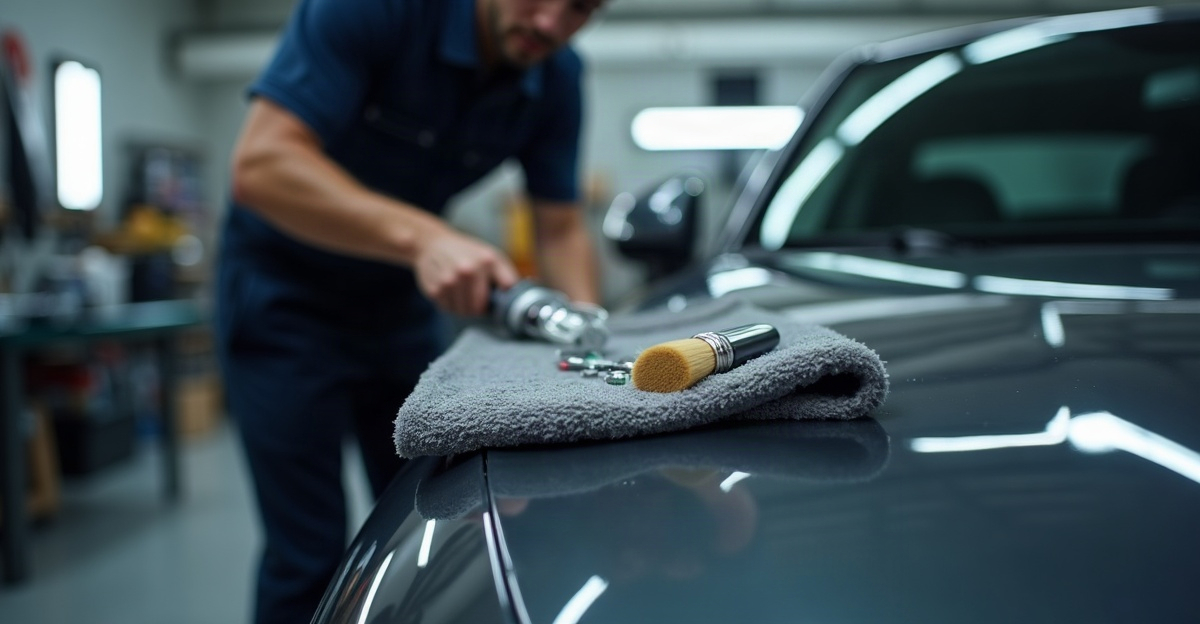
Paint correction doesn’t fix chips. It improves clear-coat defects, including swirls, haze, and light scratches. However, it can’t replace paint, primer, or metal that road debris has removed. Paint chips require touch-up paint, chip repair, spot repair, or refinishing. We select the right method based on the chip’s size, depth, location, and corrosion risk.
Key Takeaways
- Paint correction can reduce minor flaws around a chip, but it can’t fill or rebuild missing paint.
- We recommend prompt repairs for deep chips that expose primer or bare metal. This helps prevent rust, especially on panels exposed to moisture and road salt.
- Touch-up paint protects damaged areas and makes chips less visible, but it rarely delivers a factory-perfect finish.
- We complete and cure chip repairs before paint correction, ceramic coating, or other protective services.
- Ceramic coating won’t stop rock chips. Paint protection film offers stronger impact protection on high-risk panels.
The Direct Answer: Paint Correction Does Not Replace Missing Paint
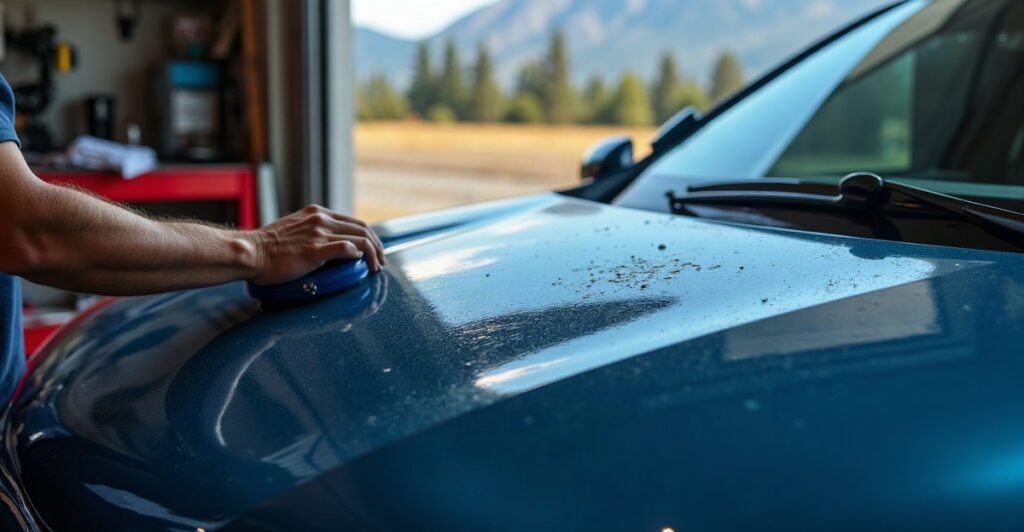
No—paint correction does not usually fix paint chips because it cannot replace paint that has been knocked off the panel. Paint correction may improve very minor defects around a chip’s edges, but it cannot fill or rebuild missing clear coat, color paint, primer, or bare metal.
For vehicle owners asking, “does paint correction fix chips,” the practical answer is simple: chip repair addresses missing paint, while paint correction improves defects in paint that is still present. The same applies to questions such as does paint correction fix rock chips, does a paint correction fix chips, and does paint correction fix paint chips.
Road debris is a common issue across Eastern Idaho, Western Wyoming, and surrounding areas. Moisture, road salt, gravel, and harsh winter driving can turn a small chip into a larger paint concern if exposed metal begins to corrode. We recommend addressing chips based on their depth and location before focusing on cosmetic polishing or protection.
Paint Chips vs. Scratches: Why the Repair Method Is Different
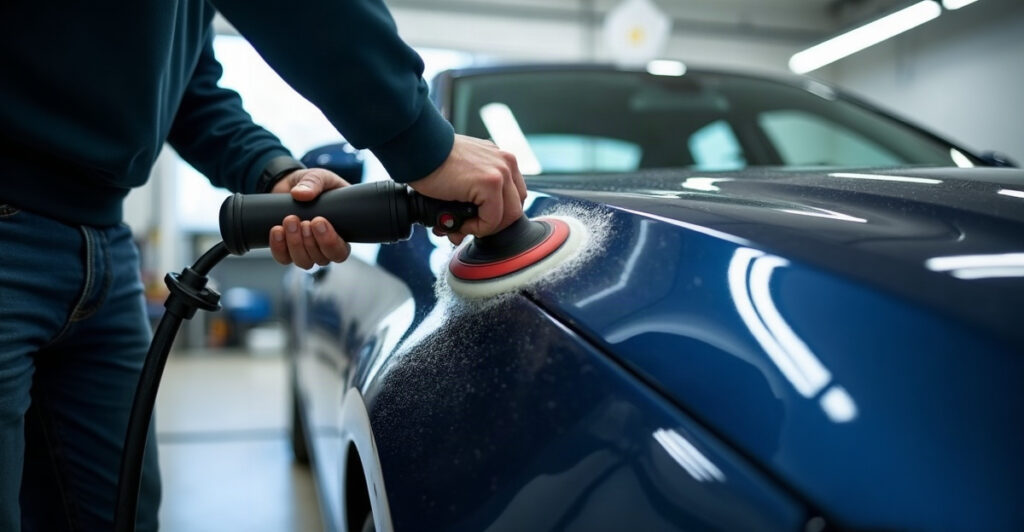
A light scratch may respond well to paint correction if it stays within the clear-coat layer. Correction uses controlled machine polishing to level a very small amount of surrounding clear coat. This process can reduce swirl marks, haze, oxidation, and many light scratches.
A paint chip is different. It is impact damage, often caused by rocks or road debris, that removes material from the surface. A chip may take off clear coat and color paint. Deeper chips may expose primer or bare metal.
Think of a swirl mark as a shallow defect within the top clear-coat layer. A rock chip is a small missing section of paint. Polishing can reduce the swirl mark because material remains on the panel. A rock chip needs paint or another repair material added back to the damaged area.
Paint correction does not add paint, fill missing material, or rebuild a damaged spot. Before recommending professional paint correction, we inspect the vehicle under proper lighting. That inspection helps us determine whether a defect is limited to clear coat or extends through the paint system.
What to Do Next Based on the Chip’s Size, Depth, and Location
Small, shallow chips without exposed metal may be good candidates for quality touch-up paint. Touch-up will not usually make the damage disappear, but it can reduce visibility and help protect the affected area.
Deep chips and exposed metal need prompt attention. Moisture can reach bare metal and start corrosion. Road salt and winter conditions can speed up that process. Watch for rust, bubbling, or staining around a damaged spot, especially along hood edges, rocker panels, wheel arches, and lower doors.
Large, numerous, or highly visible chips may call for professional chip repair, spot repair, or body-shop refinishing. Full-panel repainting is not necessary for every chip. Still, widespread damage or chips in a visible location may need more than a basic touch-up application.
During an initial inspection, we look for several practical details:
- Whether the area is indented or missing paint
- Whether primer, a different paint layer, or bare metal is visible
- Whether the chip sits in a high-impact area
- Whether corrosion has started
- Whether the vehicle has a few isolated chips or repeated impacts across the front end
The right approach depends on the size, depth, quantity, and location of the chips. Paint color and finish matter as well. Metallic paint, pearl finishes, panel material, vehicle age, current paint condition, budget, and expectations for cosmetic improvement all affect the recommendation.
What Touch-Up Paint and Professional Chip Repair Can Realistically Achieve
Touch-up paint can protect exposed areas and make chips less noticeable. It rarely produces an invisible or factory-perfect result, especially on close inspection. That is normal. The goal is often to seal the damaged area, limit corrosion risk, and improve the vehicle’s overall appearance.
Some repairs are harder to blend than others. Metallic colors, pearl finishes, large chips, hood-leading edges, bumper areas, and panels with many impacts tend to show repair work more easily. Even with professional application, the original paint texture and color match can vary based on age, sun exposure, and paint condition.
Professional chip repair can improve appearance beyond a basic touch-up application in the right situation. Larger, deeper, widespread, or highly visible damage may need spot repair or body-shop refinishing for the best result.
We base recommendations on the actual goal. A practical repair plan may focus on preventing rust, improving appearance, preparing the paint for protection, preserving resale value, or getting as close to a cosmetic match as the damage allows. Clear expectations matter more than promising a perfect outcome where one is not realistic.
How Chip Repair, Paint Correction, Ceramic Coating, and PPF Work Together
A proper service order protects the vehicle and avoids polishing around damage that still needs repair. First, chip repair addresses missing paint. Repaired areas then need to cure for the time recommended by the repair product or refinishing process.
After curing, paint correction may improve surrounding swirls, dullness, haze, oxidation, and light scratches in the remaining paint. Our auto ceramic coating service can then add gloss, make regular washing easier, and provide chemical and environmental resistance after proper preparation.
Ceramic coating is not impact protection and will not prevent rock chips. It also does not replace paint protection film. For a clear breakdown of coating benefits and limits, read what ceramic coating does before deciding on protection.
Paint protection film is generally the better choice for high-impact areas that face regular road debris. Those areas often include front bumpers, hoods, fenders, mirror caps, rocker panels, and the sections behind the wheels. Film provides a physical barrier against many road strikes, while coating focuses on gloss, maintenance, and resistance to environmental contamination.
A practical combination may include touch-up or refinishing for the chips, correction for the remaining paint, ceramic coating for easier upkeep, and paint protection film on vulnerable panels. Proper maintenance also helps preserve the results. Our guide to ceramic coating maintenance explains how to care for a protected vehicle without creating unnecessary wash damage.
Common Questions About Paint Chips, Correction, and Protection
Can Paint Correction Remove Rock Chips?
No. Paint correction cannot replace paint removed by rock chips, though it may improve very minor edge imperfections around a chip.
Can Paint Correction Fix Scratches but Not Chips?
Often, yes. Light scratches limited to the clear coat may be reduced through polishing. Chips involve missing paint and need touch-up paint, chip repair, spot repair, or refinishing.
Should We Touch Up Paint Chips Before Ceramic Coating?
In most cases, yes. Addressing chips first helps protect exposed areas and improves the overall appearance before coating preparation. Coating over a chip does not replace the missing paint.
Will Ceramic Coating Stop Rock Chips?
No. Ceramic coating is not impact protection and will not prevent rock chips. For high-impact areas, paint protection film is usually the stronger choice.
Can a Paint Chip Cause Rust?
Yes. Deep chips that expose bare metal should be addressed promptly because moisture and road salt can lead to corrosion.
Is Paint Protection Film Better Than Ceramic Coating for Rock Chips?
Generally, yes. Paint protection film is more appropriate for high-impact areas exposed to gravel and road debris. Ceramic coating still offers worthwhile gloss, easier cleaning, and chemical resistance.
The best next step is an honest paint-condition assessment. We identify whether the vehicle needs touch-up paint, professional chip repair, paint correction, ceramic coating, paint protection film, or a sensible combination of services. For a straightforward recommendation based on the vehicle’s condition and goals, contact our team.