Ceramic Coating Maintenance: How to Care Your Vehicle?
Ceramic coating maintenance is essential, and we keep it simple when we follow the right process. In this guide, we explain how consistent washing, proper products, and practical care routines protect performance, reduce contamination buildup, and help a coated vehicle retain gloss and strong water behavior over time.
Key Takeaways
- Ceramic coatings reduce maintenance needs but still require consistent washing every 2–4 weeks for most daily drivers.
- We use pH-neutral shampoo, microfiber wash tools, the two-bucket method, and proper drying techniques to protect hydrophobic performance.
- Environmental exposure such as salt, dust, hard water, and bug residue affects coating longevity and often requires more frequent cleaning.
- We avoid automatic brush washes, harsh chemicals, and neglected contaminants to prevent premature wear and surface damage.
- Reduced water beading usually signals surface contamination rather than coating failure, and we address it with proper decontamination or professional inspection.
What Ceramic Coating Maintenance Really Means (And What It Doesn’t)
Ceramic coating maintenance is required. It is not maintenance-free, and it is not permanent.
A ceramic coating reduces maintenance, but it does not eliminate it. That’s one of the biggest misconceptions we see. The coating creates a protective layer that resists contamination, UV damage, and chemical staining better than unprotected paint. Still, it works best when it’s cared for consistently.
Over time, coatings change in performance depending on exposure. Water beading may become less dramatic. The surface may feel less slick. Contaminants such as road film, minerals, and airborne debris can sit on top of the coating and reduce hydrophobic behavior. In many cases, this isn’t coating failure. It’s buildup.
Durability varies based on several real factors:
- Driving habits
- Storage conditions
- Local climate
- Wash routine
- Type of vehicle and use
A garage-kept commuter vehicle will typically hold performance longer than a daily-driven truck exposed to job sites, winter salt, and gravel roads. That’s normal.
With proper car ceramic coating maintenance, coatings last longer, retain gloss better, and continue to clean up easily. Washing becomes faster. Drying takes less effort. Contaminants release with less friction. That’s the real benefit. We focus on practical performance, not exaggerated claims.
Your Core Maintenance Routine: Simple, Consistent, and Effective
Consistency matters more than complexity. Most coated vehicles should be washed every 2–4 weeks. That range works well for average daily drivers.
Heavy-use vehicles may need attention more often. Work trucks, family SUVs, RVs, and recreational vehicles used on long trips or rural roads can benefit from more frequent rinsing. A coated boat or motorcycle exposed to bugs and water minerals may also need quicker follow-up cleaning.
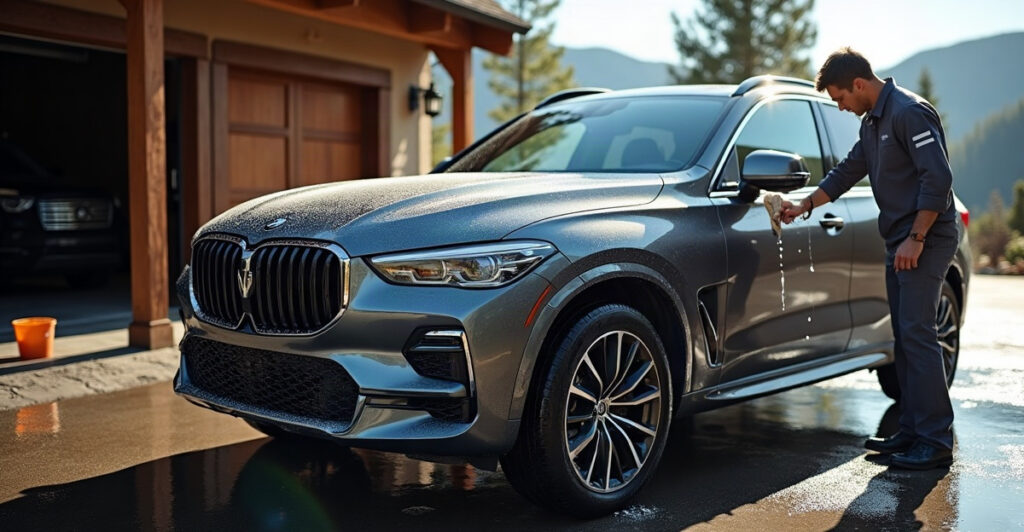
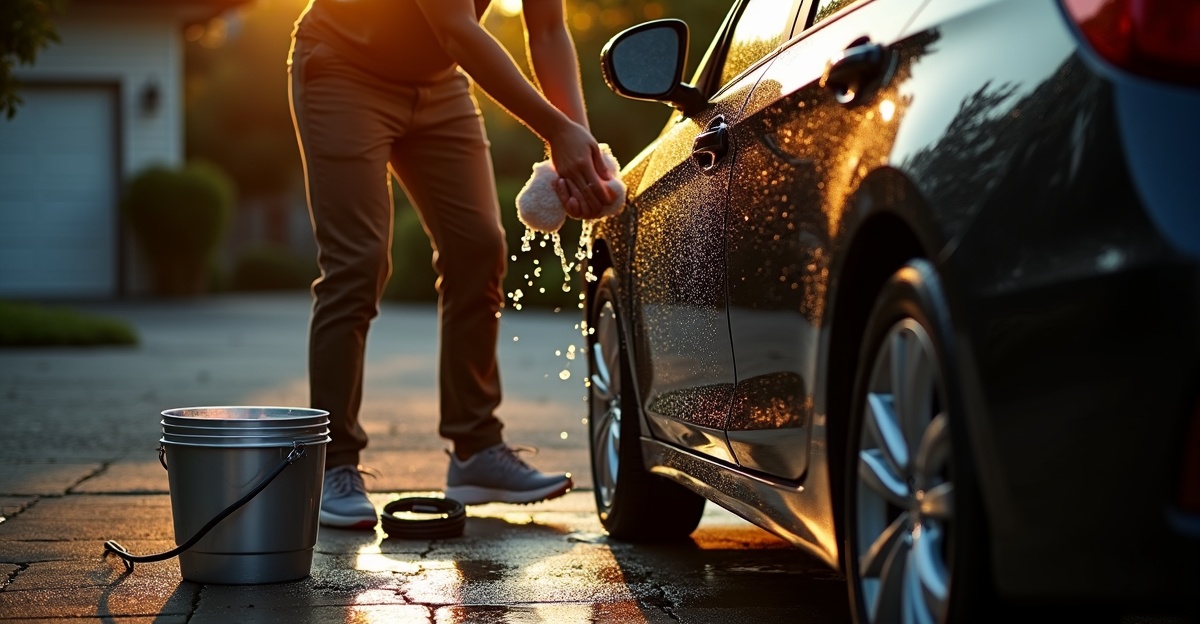
Here is the safe method we recommend for car ceramic coating maintenance:
- Pre-rinse thoroughly to remove loose dirt and debris.
- Use a pH-neutral car shampoo. Avoid dish soap or strong detergents.
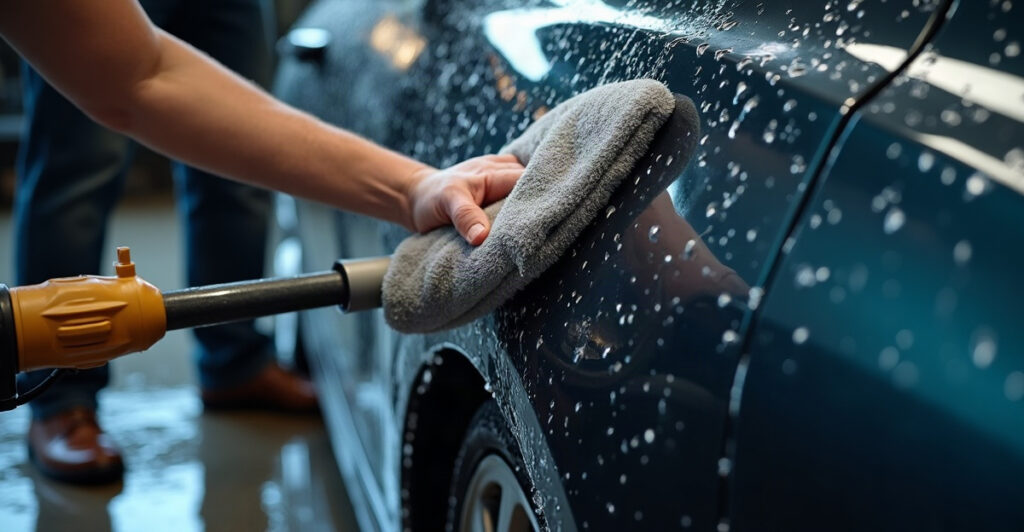
- Wash using clean microfiber wash mitts.
- Follow the two-bucket method (one wash bucket, one rinse bucket with a grit guard).
- Rinse completely.
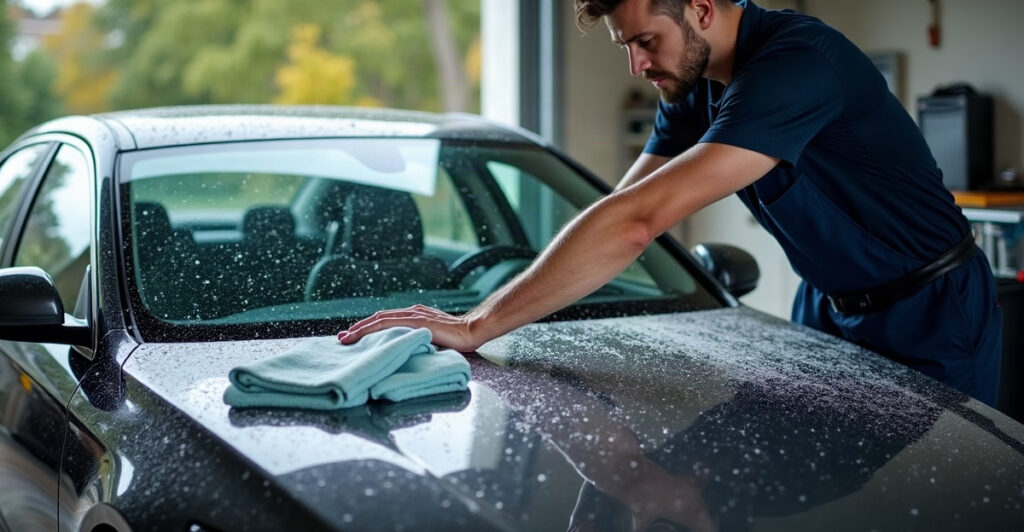
- Dry with clean microfiber drying towels or use filtered air to reduce water spotting.
A pH-neutral soap protects the integrity of the coating. Harsh cleaners can degrade the top layer over time and reduce hydrophobic properties. Strong degreasers should stay off coated paint unless professionally directed.
Proper drying is just as important as washing. In Eastern Idaho and Western Wyoming, hard water can leave mineral deposits if allowed to air dry. That buildup can dull the slick feel and reduce water beading. Quick, careful drying prevents long-term spotting.
Effective ceramic coating maintenance tips come down to this: wash gently, use the right products, and stay consistent.
Environmental Factors That Impact Coated Vehicles in Eastern Idaho and Western Wyoming
Vehicles in our region face real environmental stress. Ceramic coatings help, but they don’t make vehicles immune.
Winter is a major factor. Road salt and de-icing chemicals cling to paint, wheels, and undercarriages. Salt and brine can sit on surfaces and accelerate contamination buildup. During winter months, more frequent rinsing is smart even if a full wash isn’t possible.
Dust is another issue. Rural roads, construction zones, and agricultural areas create constant airborne debris. Fine dust can stick to the surface and reduce slickness if left unwashed.
Hard water adds another layer of risk. Mineral spotting is common here. If water dries on the surface repeatedly, deposits accumulate and reduce performance.
Recreational use increases exposure. Campers, trailers, boats, side-by-sides, and off-road trucks take on mud, sap, insect residue, and lake minerals. Bird droppings, bug splatter, and tree sap should be removed promptly. These contaminants are acidic and can etch if left sitting, even on coated surfaces.
Every vehicle type has slightly different demands:
- Cars and daily drivers should maintain a steady wash cycle year-round.
- Trucks and SUVs exposed to work sites benefit from more frequent rinsing.
- For larger vehicles, our RV ceramic coating services provide protection that still requires regular cleaning due to size and exposure.
- Motorcycles and boats exposed to insects and water minerals respond well to structured care through our motorcycle and watercraft coating services.
Maintenance should fit real schedules. We don’t expect perfection. We recommend realistic routines that keep protection working long term.
Common Mistakes That Shorten the Life of a Ceramic Coating
Ceramic coatings are protective, but improper care can reduce their lifespan and effectiveness.
Automatic brush car washes are one of the biggest issues. The rotating brushes can introduce swirl marks and micro-abrasions. That damage affects gloss and overall performance.
Harsh chemicals are another problem. Strong degreasers or acidic cleaners that aren’t formulated for coated vehicles can break down surface properties prematurely.
Letting contaminants sit too long creates avoidable damage. Bird droppings, bug residue, and tree sap can etch into the surface if ignored. Quick removal preserves both the coating and the paint beneath.
Skipping washes because “the coating protects it” leads to neglect. Dirt doesn’t slide off forever on its own. Regular cleaning keeps buildup from interfering with performance.
Overcomplicating maintenance can also backfire. Too many unnecessary products or aggressive toppers may create buildup or inconsistency. A simple, consistent wash routine works best.
Reduced water beading does not automatically mean coating failure. In many situations, it means contamination is sitting on top of the coating. Proper decontamination often restores hydrophobic behavior.
When to Schedule Professional Inspection or Maintenance
Some situations call for professional evaluation:
- Water consistently stops beading even after proper washing.
- Visible contamination does not wash off.
- The surface feels rough instead of slick.
In those cases, a professional maintenance service may be appropriate. That can include a decontamination wash, inspection of coating integrity, and maintenance treatment if necessary.
Our auto ceramic coating service clients often schedule periodic checkups to keep performance on track. If the paint underneath needs improvement, we may recommend professional paint correction before reapplying protection.
We focus on informed decisions, not pressure. Honest inspections tell us whether simple maintenance will restore performance or if additional work makes sense. Long-term protection depends on consistency and quality workmanship.
Anyone who wants a maintenance evaluation can schedule an inspection through our contact page. We’ll review the current condition and give clear, straightforward recommendations.
Ceramic Coating Maintenance FAQs
Do ceramic coatings last forever?
No. Longevity depends on care, environment, storage, and exposure. Proper ceramic coating maintenance extends performance and helps coatings reach their expected lifespan.
Are touchless car washes safe?
Touchless car washes are generally safer than brush-style washes. However, proper hand washing remains the preferred option for maintaining gloss and minimizing surface wear.
What if water stops beading?
Contamination buildup is often the cause rather than immediate coating failure. A thorough wash or professional decontamination usually restores behavior.
How often should maintenance be performed?
A simple routine every 2–4 weeks keeps protected vehicles in solid condition without taking excessive time.
Do RVs, motorcycles, and boats require different care?
The same principles apply across vehicle types. Frequency may increase due to seasonal use and exposure to bugs, salt, and minerals. Consistency and proper products make the difference.