How to Remove Oxidation From Car Paint Safely?
We remove oxidation from car paint safely by first identifying the damage. We determine whether the dull, chalky finish comes from surface oxidation or failed clear coat. Surface oxidation often responds to correction. Failed clear coat requires repainting. We wash and decontaminate the paint, test a small area, and use the least aggressive polish or compound. This process restores gloss while preserving as much clear coat as possible.
Key Takeaways
- We can often improve light and moderate oxidation with polishing. Peeling, flaking, cracking, or missing clear coat requires repainting for a lasting repair.
- We inspect clean paint under bright light and test a small section before treating a full panel.
- We use pH-balanced car shampoo, clean microfiber towels, and proper decontamination to avoid scratches during prep.
- We start with a finishing polish for light oxidation. We move to a mild or medium compound only when needed, then refine the finish with polish.
- We protect restored paint with wax, sealant, or a ceramic coating. Regular washing and quick salt removal help slow future oxidation.
What Oxidation Can Be Safely Removed—and When Polishing Will Not Help
Oxidation can often be improved or removed when it is limited to the paint surface or upper clear-coat layer. Peeling, flaking, cracking, or widespread clear-coat failure cannot be permanently repaired with polishing and usually needs repainting for a lasting result.
Paint oxidation happens when UV exposure and environmental contamination break down unprotected paint or clear coat. It can leave paint looking dull, chalky, faded, whitish, or flat. Horizontal panels, including hoods, roofs, and trunk lids, often show damage first because they receive the most sun exposure.
Knowing how to remove oxidation from car paint safely starts with a realistic inspection. We always use the least aggressive effective method because polishing and compounding remove a small amount of clear coat. A light polish may restore gloss on healthy paint. Aggressive compounding on failing paint can make the problem more visible.
Light oxidation can often respond well to cleaning, decontamination, and polishing. Severe oxidation may point to thin clear coat, failed clear coat, or damage below the surface. In those situations, no product can restore missing paint material. Learning what causes paint fading helps separate correctable dullness from damage that needs refinishing.
How to Tell if It Is Oxidation or Clear-Coat Failure
Light oxidation usually appears as reduced gloss, mild fading, and dull paint that still feels smooth after washing. The color may look tired, but the clear coat remains even and intact.
Moderate oxidation creates more obvious chalkiness, faded color, roughness, and weak reflections. The paint may look hazy even after a thorough wash. This condition can often improve with the right polish or compound process.
Heavy or white oxidation can leave strong white or gray haze, substantial color loss, and a rough or porous texture. This is where caution matters most. How to remove white oxidation from car paint depends on whether the discoloration sits in an oxidized but intact clear coat or whether clear-coat failure has already started.
Clear-coat failure looks different. Watch for peeling, flaking, cracks, patchy cloudiness that does not improve after cleaning, exposed color coat, or uneven areas where the clear coat appears missing. Polishing failed clear coat can worsen its appearance, remove loose material, and expose more damage.
We recommend washing the panel before making any decision. Inspect it under bright, even lighting, then compare a small test area with the surrounding paint. Look closely along body lines, panel edges, emblems, and upper horizontal surfaces. Those areas often have thinner paint or more UV damage.
If a small, carefully polished test spot improves clarity and gloss, the panel may be suitable for correction. If it stays cloudy, flakes, or looks uneven, polishing is unlikely to provide a durable fix. This is especially important when considering how to remove heavy oxidation from car paint without causing further damage.
Safe Preparation Before Removing Oxidation
Paint must be clean before we assess or polish it. Dirt, grit, and bonded contamination can hide the real condition of the finish and create scratches during correction.
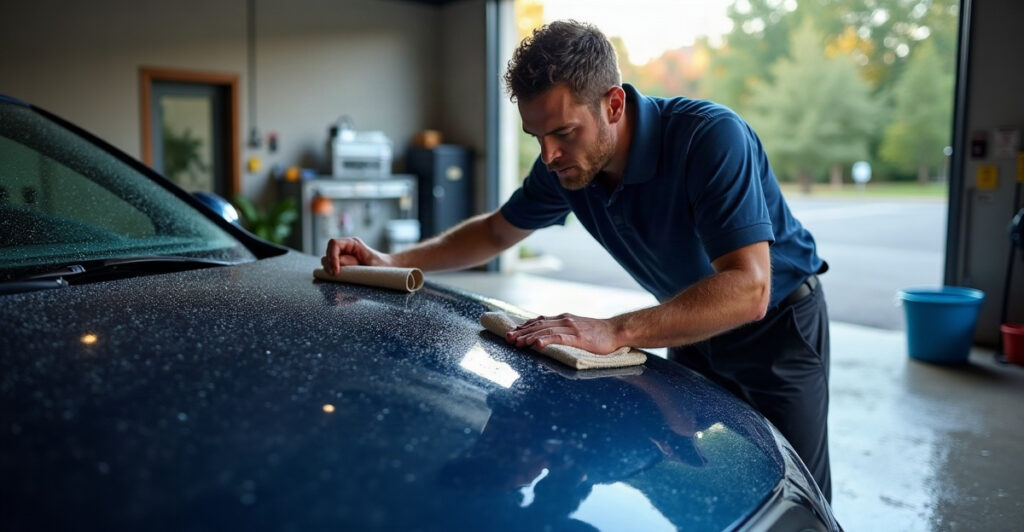
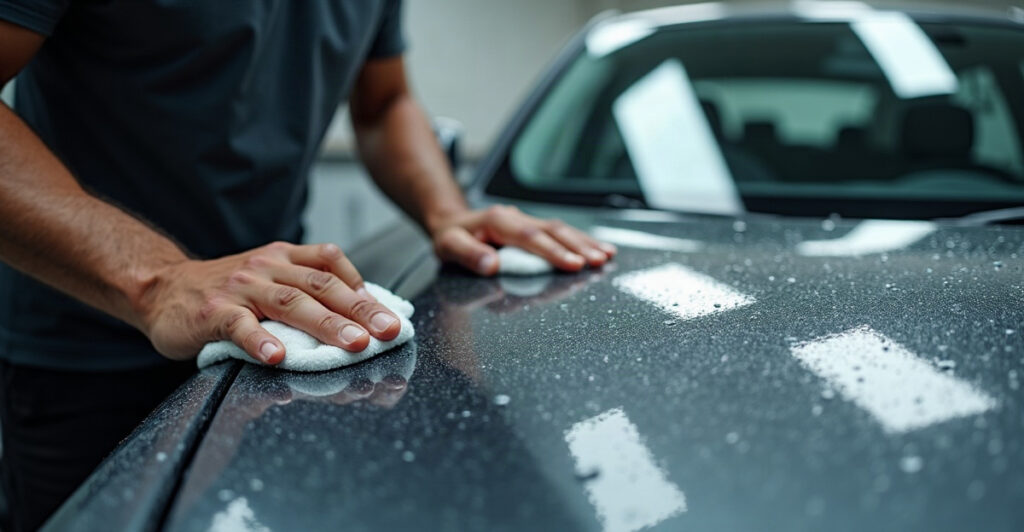
Start with a thorough wash using pH-balanced automotive shampoo, clean wash media, and fresh water. Dry the vehicle with clean microfiber towels. Rough towels or contaminated drying materials can add scratches before correction even begins.
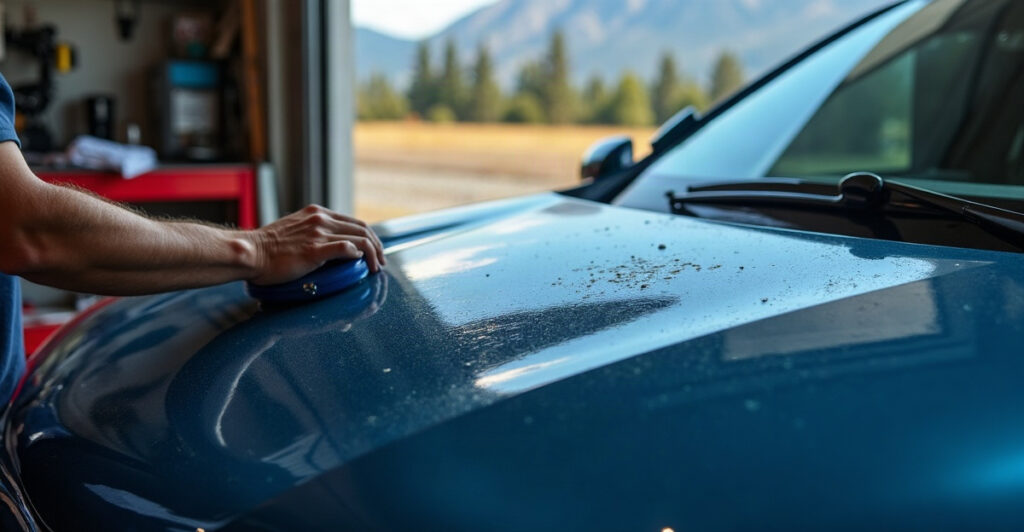
Next, decontaminate the paint as needed. An iron remover can help dissolve embedded metal particles. A clay bar or synthetic clay towel can remove bonded contamination that washing leaves behind. Proper lubrication is essential during this step. Decontamination gives polishing pads a cleaner surface to work on and reduces the risk of dragging contamination across the paint.
Work on cool panels away from direct sun. Products can dry too quickly on hot paint, making them harder to remove and increasing the chance of uneven results. We also tape off or use extra care near trim, sharp edges, body lines, emblems, and plastic trim. These areas can heat up quickly and may have less paint thickness.
Avoid household cleaners, abrasive powders, scouring pads, rough towels, harsh degreasers, and viral DIY remedies. These products can scratch paint, stain trim, strip existing protection, or worsen oxidation. Clean pads and towels matter just as much as the product choice. A dirty pad can create haze, swirls, and new defects.
Safe DIY Methods for Light and Moderate Oxidation
A test spot should always come first. Choose a small, less noticeable area and start with the mildest product and pad combination that has a reasonable chance of improving the finish. This shows what the paint can handle before we work across an entire hood, roof, or side panel.
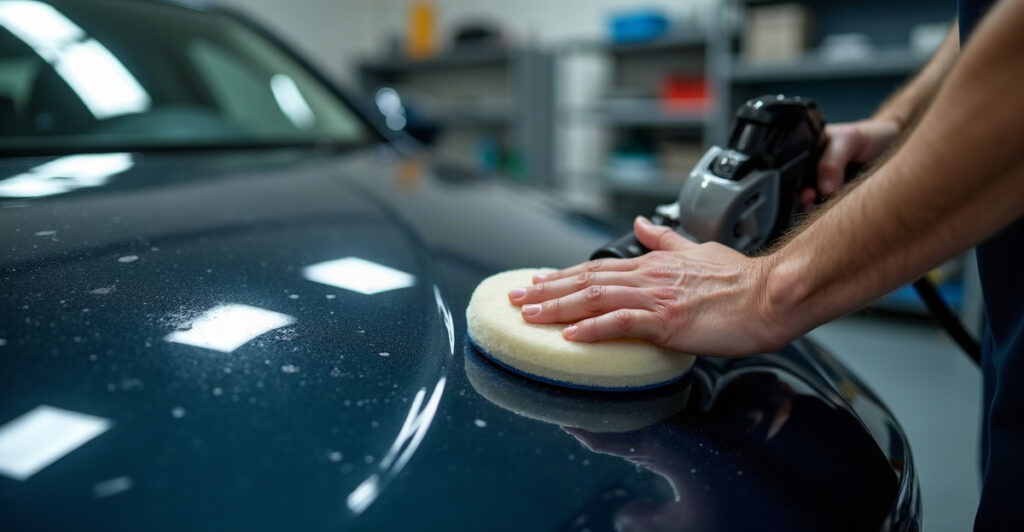
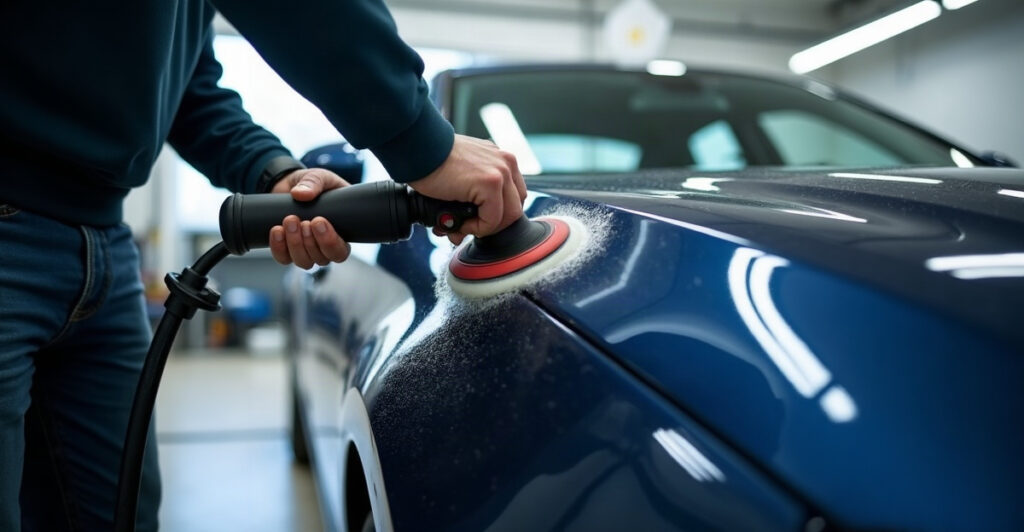
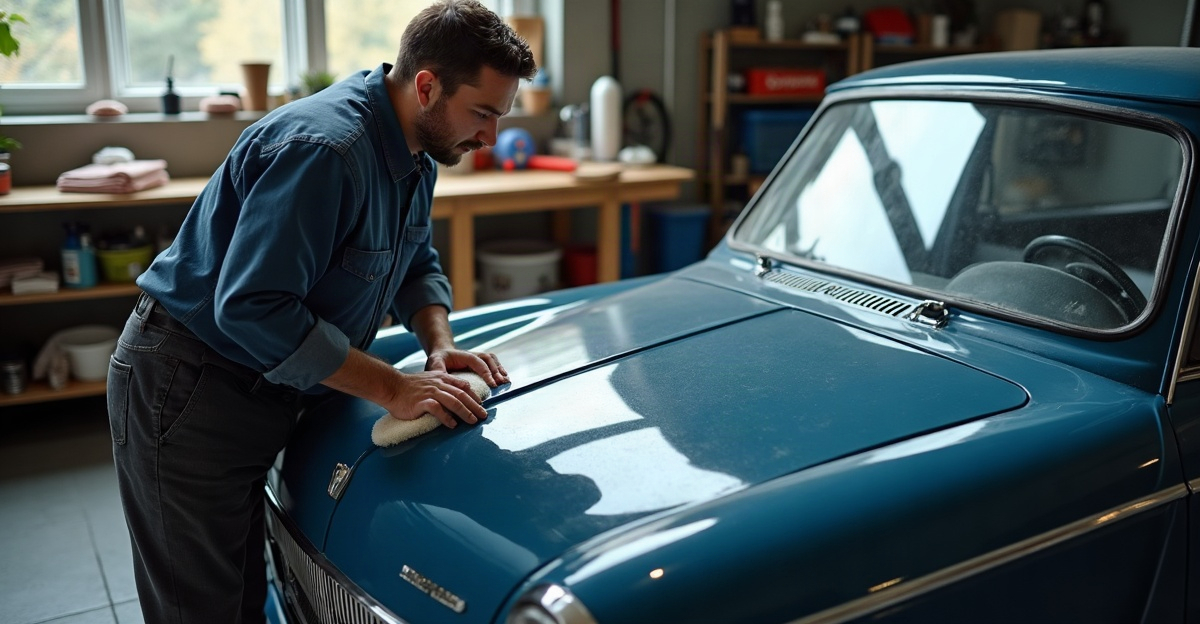
For light oxidation, a finishing polish or all-in-one cleaner wax may be enough. Polish contains fine abrasives that improve gloss and remove light haze, oxidation, and minor defects. Hand application can work on small areas, though a dual-action polisher usually produces more even results when used correctly.
For moderate oxidation, a mild-to-medium compound may be necessary before a finishing polish. Compound uses stronger abrasives and has greater cutting ability than polish. It can remove heavier oxidation and defects, but it also removes more clear coat. Follow it with a finishing polish to refine the surface and restore clarity.
Use controlled, overlapping passes with moderate pressure. Wipe the section clean and inspect it before making another pass. More passes do not always mean better results. If improvement stops, increasing aggression may create unnecessary risk.
Avoid heavy pressure, repeated aggressive compounding, dirty pads, and extended polishing on edges or sharp body lines. These mistakes can thin the clear coat, create haze, or cause burn-through. For a clearer look at the process, our guide to paint correction stages explains how professionals move from testing to refinement.
Heavy Oxidation: When to Stop and Get a Professional Assessment
We recommend a professional assessment before aggressive correction on heavy oxidation. Older vehicles, repainted panels, vehicles with unknown paint history, and large damaged areas all deserve extra caution.
Stop polishing and contact a professional if the clear coat is peeling or flaking, paint feels thin or uneven, fading covers large sections, edges look damaged, deep defects are present, or prior polishing appears uneven. The same applies when the vehicle has an unknown repaint history or you do not feel confident using a machine polisher.
Paint correction is a controlled polishing process used to reduce oxidation, scratches, haze, and other surface defects while preserving as much clear coat as practical. A qualified detailer can inspect the finish, measure paint thickness when appropriate, perform test spots, select safer pad and product combinations, and correct the vehicle more evenly.
Some oxidized paint can improve significantly. Failed clear coat and damaged paint may still require repainting. We do not make universal promises because every vehicle’s paint condition is different. Our paint correction services begin with a realistic evaluation of what can be restored safely.
For widespread oxidation, unclear paint condition, or suspected clear-coat failure, we can provide a professional paint assessment or correction consultation. This gives us a clear path before any unnecessary polishing takes place.
Protect Corrected Paint and Slow Future Oxidation
Apply protection as soon as correction is complete. Wax, paint sealant, and ceramic coating each help protect properly prepared paint, but they serve different needs.
Wax provides a traditional protective layer and can add warmth and gloss. It needs more frequent reapplication. Paint sealant uses synthetic protection and usually lasts longer than traditional wax. Ceramic coating adds durable protection, improves water behavior, makes routine cleaning easier, and helps reduce exposure to UV rays and contamination after proper preparation.
Ceramic coating does not remove oxidation, repair failed clear coat, replace paint correction, or eliminate the need for washing. Paint should be corrected first whenever oxidation, haze, or noticeable defects remain. Our comparison of paint correction versus ceramic coating explains why these services often work best together.
Eastern Idaho, Western Wyoming, and similar climates can be hard on vehicle finishes. Frequent sun exposure, windblown dust, winter road salt, outdoor parking, temperature swings, and infrequent washing can speed up paint deterioration. Regular washing, prompt salt removal, periodic protection checks, and covered parking when possible all help preserve the finish.
Can oxidation be removed from car paint? Often, yes, if it remains limited to the surface or upper clear-coat layer. Will wax remove paint oxidation? No. Wax may improve appearance temporarily, but it does not correct oxidation the way polishing can. Does ceramic coating remove oxidation? No. It protects properly prepared paint after correction. Oxidation is too severe to polish when clear coat is peeling, flaking, cracking, missing, or too thin for safe correction.
For long-term protection after the paint is properly prepared, our auto ceramic coating services provide a practical option for daily drivers and vehicles exposed to demanding weather.