How Is Ceramic Coating Applied to a Car? Step by Step
We apply ceramic coating through inspection, washing, decontamination, paint correction as needed, surface preparation, controlled application, leveling, and curing. Proper preparation and aftercare improve gloss, water repellency, and cleaning ease. However, ceramic coating doesn’t make paint scratch-proof, chip-proof, or maintenance-free.
Key Takeaways
- We begin professional ceramic coating with a detailed inspection. This step identifies contamination, swirl marks, oxidation, water spots, and other paint defects.
- We wash the vehicle, remove chemical contamination, and use clay treatment to eliminate bonded debris. These steps support strong coating adhesion and a clean finish.
- We correct visible paint defects before applying the coating. Ceramic coating doesn’t hide scratches or swirl marks, and it can make existing defects stand out.
- We apply the coating in small sections and follow the product’s specified flash times. Our installers level excess product and check for streaks or high spots before curing.
- We allow the coating to cure for the manufacturer’s recommended period. Regular washing helps maintain its appearance, water-repellent performance, and chemical resistance.
What a Professional Ceramic Coating Process Should Include
Ceramic coating isn’t simply sprayed or wiped onto a vehicle. Preparation, application technique, and curing have the greatest effect on appearance and long-term performance.
How is ceramic coating applied? A professional process starts with inspection, washing, decontamination, and paint preparation. We then polish the paint when needed, remove polishing residue, apply coating in controlled sections, level the excess, inspect for high spots, and allow proper curing.
The exact process depends on paint condition, vehicle size, contamination, previous waxes or coatings, paint type, ownership goals, and whether paint correction is included. A well-installed coating can improve gloss, water behavior, washing ease, and resistance to common chemical and environmental contamination.
It does not make paint scratch-proof, maintenance-free, permanent, or indestructible. Ceramic coating won’t stop every swirl mark, scratch, rock chip, dent, collision issue, or damage caused by neglect. For dependable results, coatings need clean, bare, properly prepared paint. Applying product over oxidation, water spots, embedded debris, swirl marks, or polishing oils can leave defects visible and may affect bonding.
Inspection, Washing, and Paint Decontamination
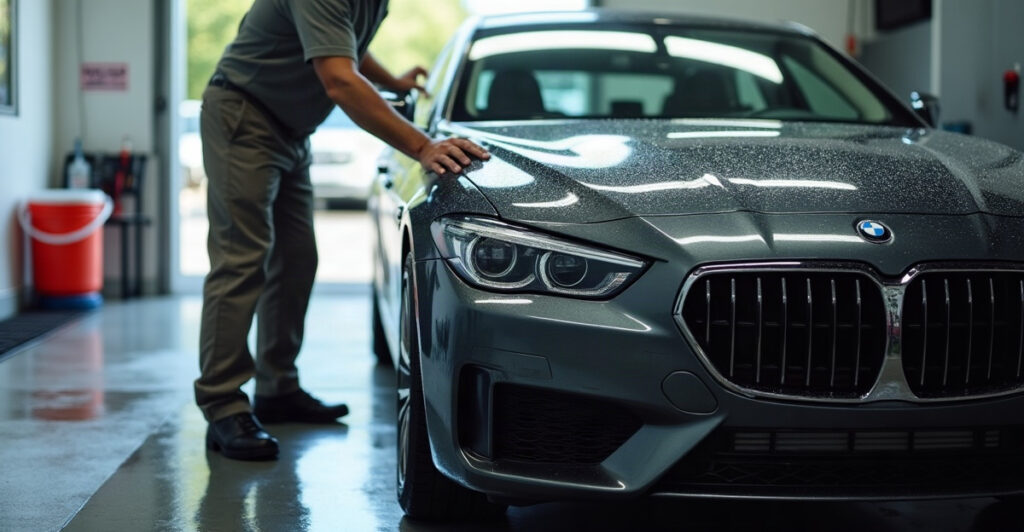
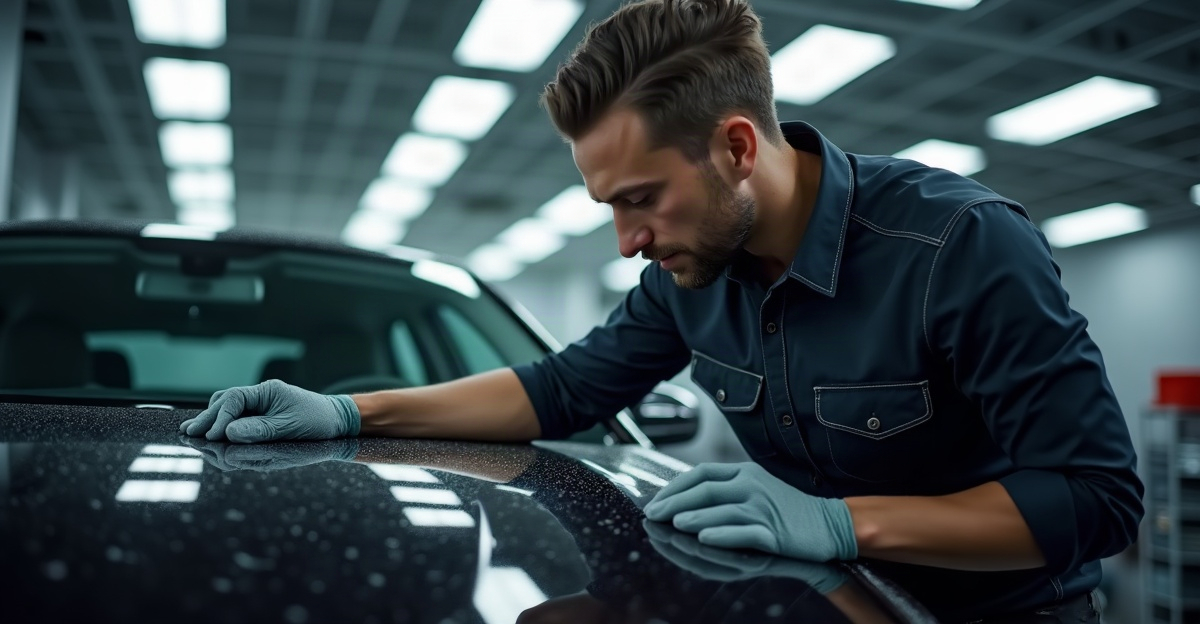
Before we apply a coating, we inspect the vehicle panel by panel under proper lighting. This shows swirl marks, scratches, oxidation, water spots, prior coating residue, bonded contamination, and areas that may need added correction.
We also discuss how the vehicle is used. Vehicle age, expected ownership length, outdoor parking, annual mileage, winter driving, UV exposure, road grime, recreational use, and maintenance habits all affect the recommended service.
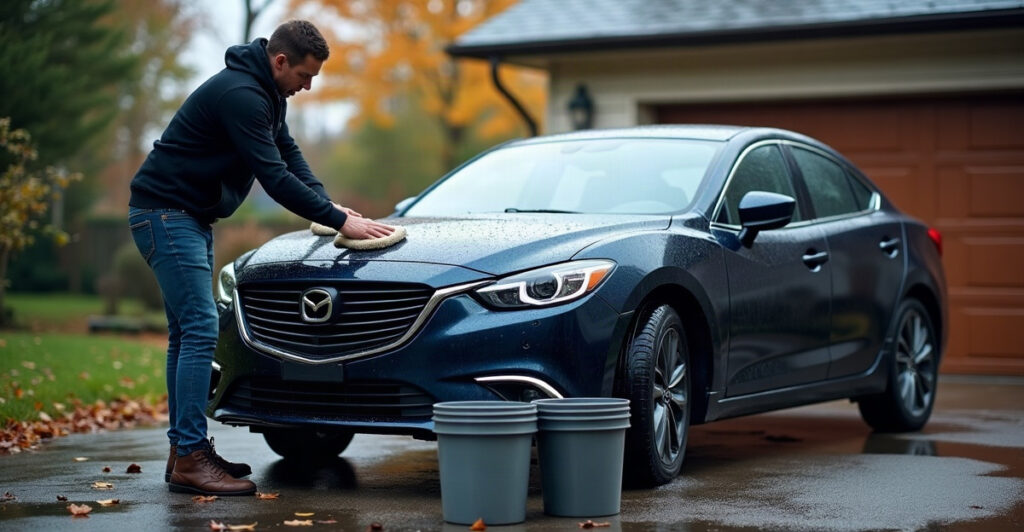
The preparation process usually begins with a pre-wash to loosen dirt, salt, traffic film, and heavy grime. A careful hand wash then removes remaining surface contamination. This first stage prevents loose dirt from interfering with later work.
Ordinary washing doesn’t remove everything bonded to paint. Iron removers dissolve embedded metallic particles, while tar removers break down road tar and similar residue. If the paint still feels rough after chemical treatment, we may use clay or another mechanical decontamination method to remove remaining particles.
Once the vehicle is dry, we mask sensitive trim, badges, edges, and other areas that need protection during polishing. Proper lighting helps us complete another detailed inspection before correction or coating begins. Every vehicle needs a different level of work. A lightly used newer vehicle may need less decontamination than an older daily driver that has spent years outdoors.
Paint Correction and Final Surface Preparation
Paint correction is the polishing process used to remove or reduce visible paint defects instead of hiding them. It’s often the most important part of how a ceramic coating is applied to a car because coating can preserve—and sometimes emphasize—whatever remains underneath.
For paint with mild wash marks and limited defects, an enhancement polish may improve gloss and reduce lighter imperfections. Vehicles with heavier swirl marks, oxidation, or more visible defects may need multi-step correction. Our paint correction service focuses on improving clarity while making sensible decisions about clear-coat preservation.
No process should promise complete removal of every defect on every vehicle. Paint thickness, paint condition, vehicle age, and realistic appearance goals determine the right correction level. A practical balance protects the remaining clear coat while delivering a noticeable improvement.
Professional polishing requires clean equipment, suitable products, correct technique, proper lighting, and controlled work conditions. After polishing, we wipe each panel with a dedicated surface-prep product. This removes polishing oils and residue so the coating can bond directly to the prepared paint. For a closer look at the process, read how paint correction works.
The same preparation principles apply to cars, trucks, SUVs, RVs, motorcycles, watercraft, and recreational vehicles. Material types, panel access, and condition may change the approach. We also provide truck and SUV coating options for larger vehicles that need protection suited to regular use.
Applying the Ceramic Coating: Small Sections, Flash Time, and High-Spot Checks
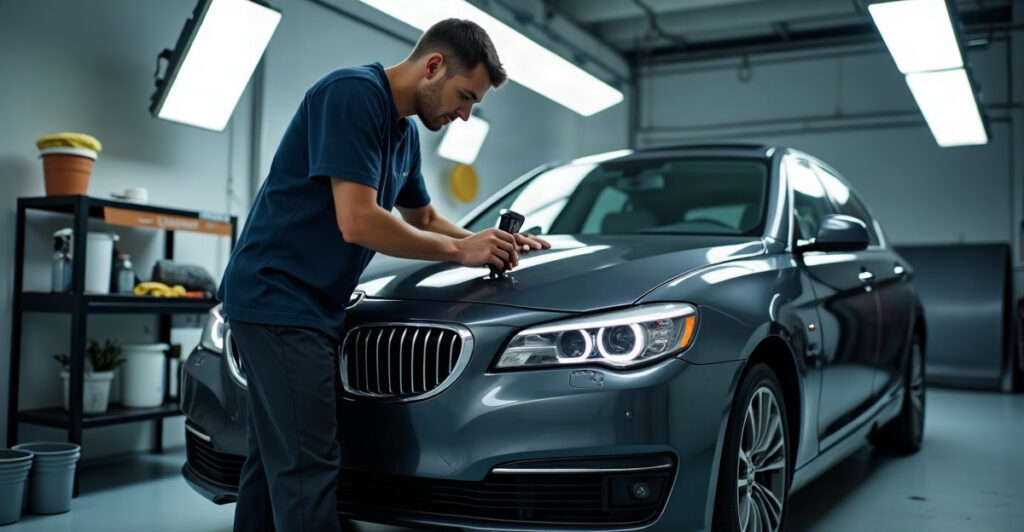
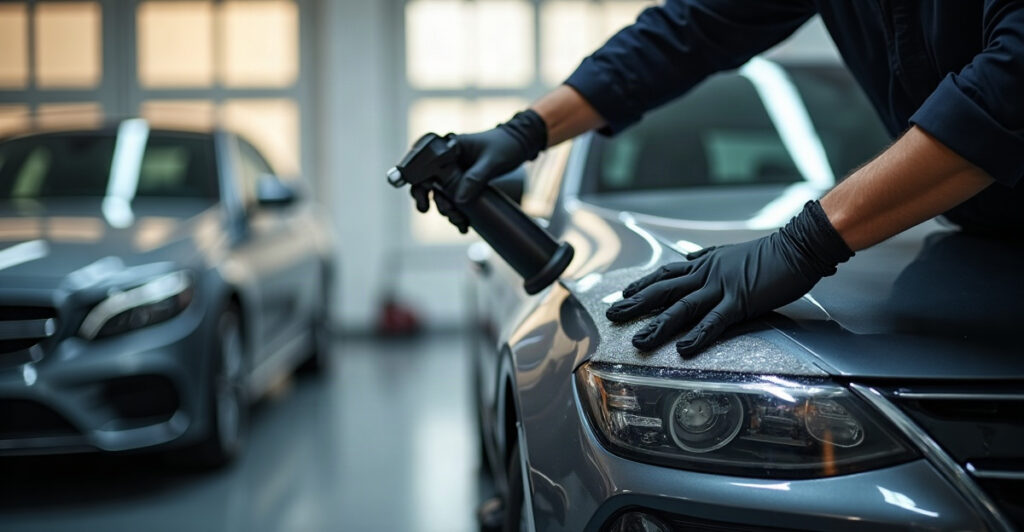
How ceramic coating is applied matters as much as the product itself. We apply the coating to one small, manageable section at a time using the applicator method specified by the manufacturer.
Professional application requires a clean work area, proper lighting, prepared panels, and temperatures that support the product’s directions. Once applied, the coating enters its flash period. Flash time is the point when the product begins bonding before we wipe away excess material.
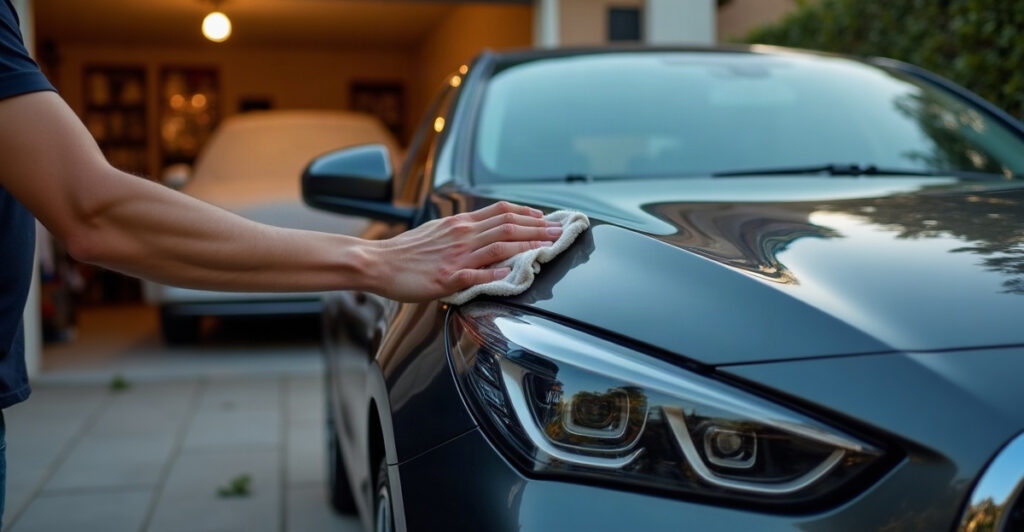
We then level the coating by removing excess product and creating an even, clear finish. Timing is important. Flash time varies based on the coating, temperature, humidity, and current working conditions. There is no universal wait time that works for every product.
High spots are areas where excess coating remains on the paint. They can dry unevenly and appear streaky, dark, or cloudy. We inspect every panel under proper lighting for high spots, missed areas, streaking, and uneven coverage before the coating fully cures.
Poor preparation or incorrect timing can cause uneven results and bonding concerns. That’s why a quality auto ceramic coating installation involves much more than a quick wipe-on application.
Curing, First Washes, and Long-Term Maintenance
After application, the coating needs time to cure and develop its intended bond. Many products need protection from water, washing, harsh chemicals, and severe weather during the initial cure period. We follow the specific manufacturer guidance and provide clear installer instructions instead of using one cure time for every coating.
Before leaving, we recommend confirming when the vehicle can be driven, exposed to rain or snow, washed, or returned to normal outdoor use. For additional guidance, see ceramic coating cure time and when to wash after coating.
Ceramic coating makes regular cleaning easier, but it doesn’t eliminate maintenance. Careful washing removes road grime, salt, bug residue, mineral deposits, and environmental fallout before they remain on the surface too long. Storage, mileage, climate, winter exposure, UV exposure, product choice, application quality, and maintenance all influence longevity.
Common Timing and Aftercare Questions
- How long does application take? Timing varies based on vehicle size, preparation needs, correction level, and curing requirements. A vehicle needing significant correction takes longer than one with paint in excellent condition.
- How long does ceramic coating need to cure? Follow the coating manufacturer’s instructions and the installer’s aftercare guidance.
- Can we wash a car after coating? Wait for the stated cure period before washing or using harsh chemicals.
- Can ceramic coating go on a used car? Yes. Used vehicles often need additional decontamination or paint correction before coating.
For practical washing advice over the life of the coating, review our ceramic coating maintenance guide.
Is Ceramic Coating the Right Protection Option for Your Vehicle?
Ceramic coating primarily improves gloss, hydrophobic behavior, washing ease, and chemical resistance. Wax and paint sealants provide shorter-term protection and need periodic reapplication. Paint protection film, often called PPF, generally provides stronger physical impact protection for rock chips and high-impact areas.
Ceramic coating and PPF serve different purposes. For concerns about chips on bumpers, hoods, mirrors, and similar areas, PPF may be the better match. Coating remains a practical choice for drivers who want a cleaner-looking finish and easier upkeep across the painted surfaces.
DIY products can work for owners comfortable with thorough preparation, careful timing, and regular maintenance. Professional installation usually provides more detailed preparation, correction capability, controlled conditions, defect identification, and less risk of high spots or uneven application.
Professional coating may be worth considering when we plan to keep the vehicle for several years, drive in difficult conditions, park outdoors, value resale appearance, and are prepared to maintain it. Expectations should change if we expect chip-proof or scratch-proof paint, never plan to wash the vehicle, need impact protection, or want a permanent result without upkeep.
A car doesn’t always need paint correction before coating, but correction is often recommended when visible defects affect the desired appearance. Coating can be applied over scratches or swirl marks, but it won’t remove them and may make them easier to see.
Questions to Ask Before Choosing a Ceramic Coating Provider
A clear conversation before service protects the vehicle and sets realistic expectations. A quality provider should explain inspection findings, preparation steps, correction expectations, application conditions, curing instructions, maintenance requirements, and the limits of the protection.
Ask what preparation is included in the quoted service, whether paint correction is included and at what level, and how current paint condition will be assessed. Confirm the coating product or system being used, its maintenance needs, and how long the vehicle should remain away from washing or harsh weather.
It also helps to ask how the installer checks for high spots and ensures even coverage. A proper process should include inspection, washing, decontamination, correction when appropriate, removal of polishing residue, controlled application, high-spot checks, and clear aftercare instructions.
For newer vehicles, ceramic coating on a new car can still make sense, but factory-fresh paint should always be inspected before protection is applied. We can help assess paint condition, protection goals, and the right preparation level through a straightforward ceramic coating consultation.