When Can You Wash Your Car After Ceramic Coating?
Washing a car after ceramic coating requires patience because the coating needs time to bond and harden before we expose it to water, soaps, or agitation. We need to respect the curing window to protect long-term durability, gloss, and hydrophobic behavior. Proper timing prevents streaking, water spotting, and premature wear during the curing stage.
Key Takeaways
- Avoid washing for at least 7 days after application to allow proper short-term curing and bonding.
- Keep the vehicle completely dry for the first 24–48 hours, and dry it promptly if light rain occurs.
- Full cure can take 2–4 weeks, depending on product type, temperature, humidity, and local climate conditions.
- After 7 days, use pH-neutral shampoo, microfiber wash tools, low-pressure rinsing, and proper drying techniques.
- Consistent washing every 2–4 weeks and avoiding harsh chemicals or automatic brush washes helps maintain long-term coating performance.
How Long to Wait Before Washing After Ceramic Coating
For most vehicles, we recommend avoiding washing the car after ceramic coating for at least 7 days. That waiting period allows the coating to bond properly and build strength before it’s exposed to soaps, agitation, and pressure.
Ceramic coatings cure in phases. Understanding those stages helps set realistic expectations.
During the first 24–48 hours, the coating goes through initial curing. We aim to keep the vehicle completely dry during this window. That includes avoiding rain, sprinklers, and intentional washing. The surface may feel dry to the touch, but the chemical bond is still forming.
The next phase is short-term curing, which covers the first 7 days. We avoid washing and stay away from chemicals during this time. The coating continues hardening and increasing its resistance to water and contaminants.
Full cure can take up to 2–4 weeks, depending on the specific product and environmental conditions. Temperature, humidity, and airflow all affect cure time. Higher elevation climates like Eastern Idaho and Western Wyoming can also influence curing. Dry air and cooler nights can change how quickly solvents flash and how the coating settles. That’s why we always follow manufacturer guidelines and adjust recommendations based on local conditions.
These timelines align with general manufacturer standards, though different products vary slightly. Cure times also depend on installer technique and shop conditions. Ceramic coating is durable, but its bond strengthens gradually over time. Giving it that initial week without washing makes a real difference in long-term performance.
What Happens If the Coating Gets Wet Early?
Light water exposure and washing the vehicle are two different situations.
If the coating gets caught in light rain within the first 24 hours, it doesn’t automatically mean the job is ruined. Occasional early water exposure typically won’t destroy the coating. However, minerals in the water can leave spots while the surface is still curing.
If rain occurs within that first day, we gently dry the vehicle as soon as possible. We use a clean microfiber drying towel or filtered air. The goal is simple: remove the water before minerals settle and etch.
In regions like Eastern Idaho and Western Wyoming, hard water is common. Rapid evaporation at elevation makes spotting more likely, especially during the initial curing window. Fast drying leaves behind mineral deposits that can stain if they sit too long.
Intentionally washing the car after ceramic coating during the first week is different. Washing introduces soaps, agitation, pressure, and repeated moisture exposure. That combination can interfere with the early curing process. One minor mistake usually won’t destroy the coating, but repeated exposure during cure can reduce performance or require corrective work later.
We keep it practical. Stay dry for the first 24–48 hours. Avoid washing for 7 days. If water touches the surface early, dry it properly and move on.
The Right Way to Wash a Coated Vehicle
After the 7-day window, routine maintenance can begin. Washing a car after ceramic coating requires gentle technique, not aggressive scrubbing. The coating helps release dirt, but it’s still a clear layer on your paint. It can scratch if handled carelessly.
We recommend the following approach:
- Use a pH-neutral shampoo. Avoid harsh detergents, degreasers, or household soaps.
- Use the two-bucket method. One bucket holds your soapy water, and the other is a rinse bucket with grit guards if available.
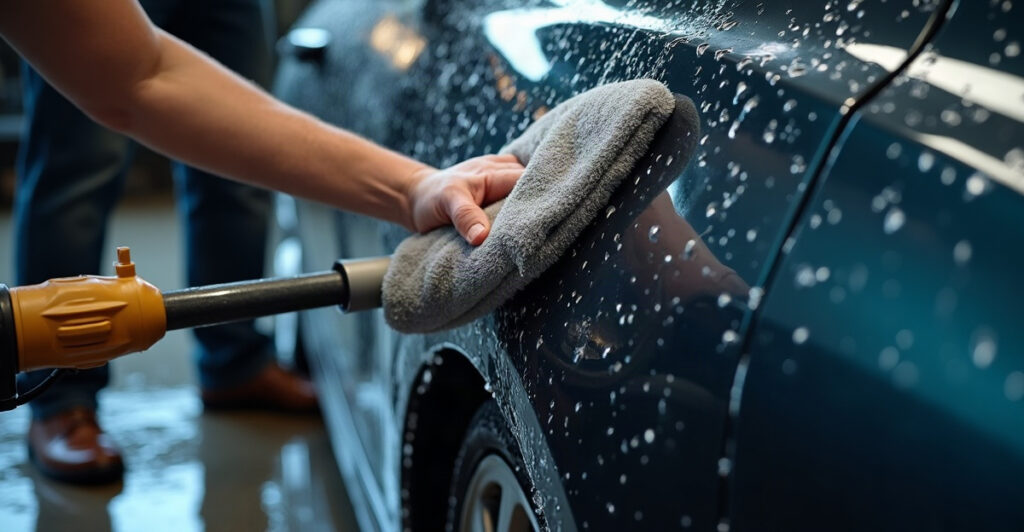
- Wash with clean microfiber mitts only. Skip abrasive sponges and brushes.
- Rinse with low-pressure water. There’s no need to blast the surface.
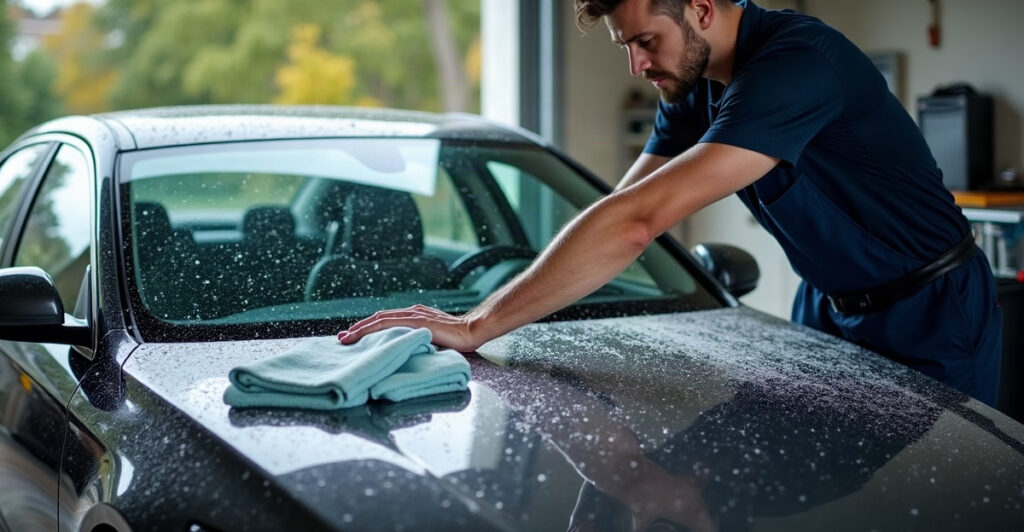
- Dry immediately using clean microfiber drying towels or filtered air to prevent mineral spotting.
Ceramic coatings make cleaning easier because contaminants release more quickly. That doesn’t mean the vehicle is maintenance-free. Swirl marks can still form from improper washing. Scratches can still happen from rough contact.
Using proper technique protects gloss, maintains hydrophobic performance, and keeps the surface looking the way it should.
Common Mistakes That Shorten Coating Performance
We see a few patterns that reduce coating performance over time.
Washing too early is one of the most common issues. Cleaning the vehicle before the 7-day mark interferes with curing and can limit long-term durability.
Automatic car washes, especially brush-style systems, create swirl marks. Those spinning brushes don’t know the difference between coated and uncoated paint. Touchless washes are less abrasive, but they often rely on aggressive chemicals.
Harsh acidic or highly alkaline cleaners can weaken the coating’s surface properties. Products not intended for coated vehicles sometimes strip away hydrophobic performance.
Letting hard water air-dry on the surface is another issue in our region. Mineral spots build up over time and can require polishing to remove.
Applying waxes that aren’t compatible with ceramic coatings can clog the surface and reduce water behavior. Many traditional waxes aren’t needed and may interfere with how the coating sheds water.
Ceramic coatings help resist contaminants, but they don’t prevent all scratches, rock chips, or water spotting. Overestimating protection leads to careless maintenance. Most mistakes don’t automatically destroy the coating, but repeated poor care reduces gloss and water behavior sooner than it should.
If correction becomes necessary, professional paint correction can restore clarity before reapplying protection.
Ongoing Maintenance for Long-Term Results
We typically recommend washing your car after ceramic coating every 2–4 weeks. The exact interval depends on driving habits, weather, and storage conditions.
Vehicles exposed to heavy road grime, bug buildup, snow chemicals, or off-road use need more frequent cleaning. That applies especially to trucks and SUVs used for work or recreation in our area. Our truck and SUV coating services are built for that kind of use, but even the best coating benefits from consistent maintenance.
Maintenance toppers or ceramic sealants can usually be applied after the full cure period of 2–4 weeks, unless the installer recommends otherwise. These products refresh slickness and hydrophobic behavior but shouldn’t replace proper washing habits.
We approach ceramic coating as a long-term investment. Good prep, proper installation, and consistent maintenance produce the best results. Our auto ceramic coating service focuses on quality workmanship and realistic expectations so the vehicle performs well for years, not just months.
Frequently Asked Questions About Washing After Ceramic Coating
What if it rains within 24 hours?
We gently dry the vehicle as soon as possible using clean microfiber towels or filtered air. That reduces the risk of mineral spotting during early cure.
Can we use a touchless wash?
After the 7-day cure period, occasional touchless washes may be acceptable. Many facilities use strong chemicals, so we still prefer careful hand washing whenever possible.
When can maintenance toppers be applied?
Most coatings reach full cure within 2–4 weeks. After that point, maintenance toppers are generally safe unless your installer gives different instructions.
How often should a coated vehicle be washed?
Every 2–4 weeks works for most vehicles. Adjust based on mileage, climate, and exposure to contaminants like road salt, bugs, and dirt.
If questions ever come up about washing car after ceramic coating, it’s always better to ask a professional than guess.