Vehicle Exterior Protection: How to Keep Your Car Looking New?
We preserve a vehicle’s like-new appearance through safe washing, paint preparation, and protection that matches driving conditions, storage, and paint condition. Ceramic coating adds gloss, UV resistance, and easier cleaning. Paint protection film delivers stronger defense against rock chips and road debris in high-impact areas.
Key Takeaways
- We protect exterior surfaces from UV rays, road salt, bugs, tree sap, hard water, gravel, and improper washing, which can dull paint and cause damage.
- Decontamination and paint correction improve surface condition before we apply protection. Deep scratches, chips, dents, and failing paint may need repair first.
- Ceramic coating improves gloss, chemical resistance, water behavior, and washability. It won’t prevent rock chips, dents, or deep scratches.
- Paint protection film works best on high-impact areas, including bumpers, hood edges, fenders, mirrors, rocker panels, and behind-wheel sections.
- Regular washing, prompt salt removal, safe drying, and clean microfiber towels help us maintain paint, wheels, glass, trim, and protective coatings.
What Is Damaging Your Vehicle’s Exterior—and What Actually Helps
Vehicle exterior protection works best as a system, not as one product or service. Proper washing, decontamination, paint preparation, protection, and ongoing care all affect the final result.
Daily driving exposes paint, trim, glass, and wheels to UV exposure, oxidation, road grime, tar, bugs, bird droppings, tree sap, hard-water spotting, and mineral deposits. Road salt and de-icing brine can build up underneath the vehicle and around wheel areas during winter. Gravel, loose aggregate, and highway debris can chip paint. Improper washing with abrasive towels, dirty brushes, or poorly maintained automatic washes can create swirl marks and dull the finish.
Eastern Idaho and Western Wyoming add a few challenges. High-altitude UV exposure, quick weather changes, snow, de-icing brine, gravel roads, mountain highways, outdoor recreation, and hard water can accelerate exterior wear. Outdoor storage adds further exposure to sun, wind, rain, snow, and airborne contamination.
Ceramic coating improves gloss, water behavior, chemical resistance, UV resistance, and ease of cleaning. It does not stop rock chips, dents, deep scratches, or collision damage. For stronger impact protection, paint protection film provides a physical barrier that helps protect high-impact areas from road debris. Understanding ceramic coating benefits helps us choose protection based on realistic expectations instead of marketing claims.
Vehicle Exterior Protection Options at a Glance
Different vehicle exterior protection options fit different budgets, driving habits, and ownership plans. We do not recommend the highest-investment option for every vehicle. The right choice depends on the condition of the paint and how the vehicle is used.
| Option | Primary Purpose | What It Helps Protect Against | What It Does Not Protect Against | Typical Maintenance Needs | Relative Durability | Relative Investment |
|---|---|---|---|---|---|---|
| Routine washing and drying | Remove contaminants | Staining, salt buildup, grime, and mineral deposits | Chips, scratches, dents, and paint defects | Regular washing and safe drying | Ongoing | Low |
| Wax | Short-term gloss and water repellency | Light environmental exposure | Chips, major chemical exposure, and deep scratches | Frequent reapplication | Short | Low |
| Synthetic paint sealant | Longer-lasting surface protection | Environmental contamination and water spotting | Impact damage and deep defects | Periodic reapplication | Moderate | Low to moderate |
| Paint correction | Improve paint appearance | Swirl marks, oxidation, dullness, and light scratches | Future damage without added protection | Safe washing and protection afterward | Depends on care | Moderate to high |
| Ceramic coating | Gloss, hydrophobicity, and easier cleaning | UV exposure, chemical contamination, and wash-related buildup | Rock chips, dents, deep scratches, and collision damage | Regular safe washing and periodic decontamination | Longer-term | Moderate to high |
| Paint protection film | Physical impact protection | Rock chips, road debris, and light abrasion in covered areas | Dents, major impacts, and damage outside covered areas | Routine washing and inspection | Longer-term | High |
Wax remains a practical choice for owners who enjoy frequent detailing and want a lower initial cost. A synthetic paint sealant usually lasts longer than traditional wax and offers practical protection against environmental contamination, though it still needs reapplication. For a direct comparison, see wax vs. ceramic coating.
Paint correction restores appearance but does not serve as a standalone protective layer. Ceramic coating helps keep a corrected finish easier to maintain. Paint protection film, often called PPF, offers more meaningful chip resistance on covered panels. A combined ceramic coating and PPF approach often makes sense: PPF on high-impact zones and coating on the remaining painted surfaces for consistent gloss and simpler upkeep.
Start With the Paint: Inspection, Decontamination, and Paint Correction
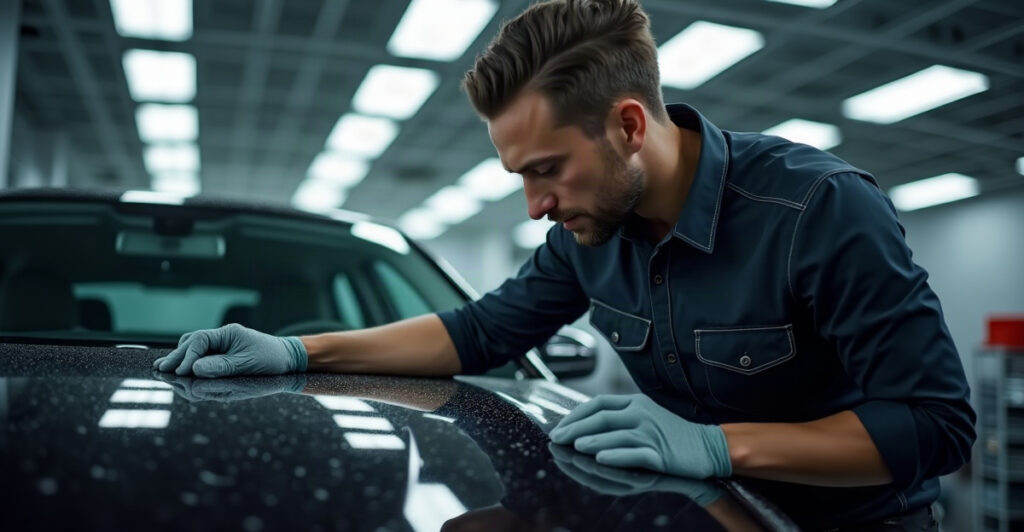
A quality protection job starts with a paint-condition assessment. We inspect the paint, identify bonded contamination and existing defects, discuss where the vehicle travels, and match recommendations to the owner’s goals.
Decontamination means removing bonded material from exterior surfaces before polishing or applying protection. This may include embedded industrial fallout, mineral deposits, overspray, tar, and brake dust. A vehicle can look clean while still carrying contamination that affects the finish and prevents protection from bonding properly.
Paint correction is a polishing process that improves swirl marks, light scratches, oxidation, dullness, and wash-induced marring. It can significantly improve gloss and clarity before a coating or film installation. Our paint correction service focuses on practical improvement while respecting paint thickness and long-term paint health.
Coatings preserve the surface beneath them. They can also make existing defects easier to see in direct sun or bright shop lighting. That is why paint preparation matters.
Not every vehicle needs extensive correction. The proper level depends on paint condition, paint thickness, budget, and the desired outcome. Deep scratches, rock chips, peeling clear coat, dents, failed paint, and collision damage may require touch-up, bodywork, or repainting instead of polishing or coating alone.
New vehicles also need inspection. New paint is not always defect-free after transport, dealership washing, storage, or delivery preparation. Light correction and decontamination may still be appropriate before protection.
Ceramic Coating and PPF: Benefits, Limits, and Where Each Makes Sense
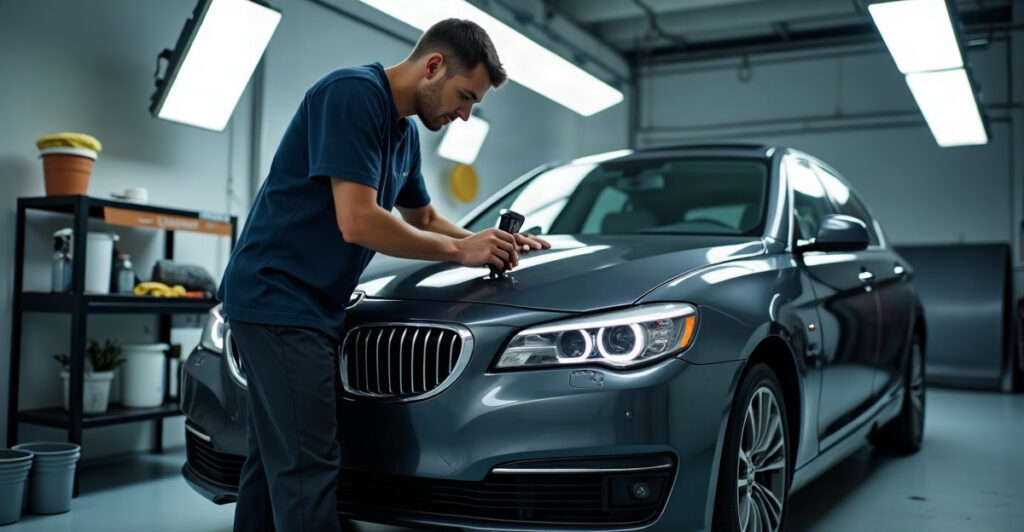
Ceramic coating expectations should stay realistic. A coating is not bulletproof, maintenance-free, or permanent. It is a protective layer that can improve gloss, add chemical and UV resistance, and make washing easier.
Hydrophobicity means water tends to bead or sheet more easily on the surface. It does not mean the vehicle cannot get dirty. Dust, mud, road film, bugs, and salt still accumulate, especially during active winter driving or trips on gravel roads.
Ceramic coatings do not prevent every scratch, rock chip, dent, or water-spot etching. They help reduce how strongly many contaminants bond to the surface, but they do not replace regular washing. A coated vehicle is easier to clean, not self-cleaning. For a clearer understanding of limitations, review ceramic coating scratch protection.
Curing is the period when a freshly applied coating sets and develops its intended performance. We follow product-specific procedures and recommend following aftercare instructions closely during this period. Coating longevity depends on the product, paint preparation, installation quality, storage, wash practices, climate, contaminant exposure, and ceramic coating maintenance.
Paint protection film makes the most sense where physical impact happens most often. Front bumpers, leading hood edges, fenders, mirrors, rocker panels, lower doors, and behind-wheel areas commonly see chips and road debris. PPF for rock chips is especially practical for vehicles driven frequently on mountain highways, gravel roads, or routes with loose aggregate.
Ceramic coating may be the better fit when easier washing, improved gloss, and resistance to environmental contamination are the main priorities. For vehicles needing both appearance support and impact protection, we may recommend auto ceramic coating with targeted paint protection film.
Choose Protection Based on How You Drive, Store, and Plan to Keep the Vehicle
The best exterior protection for daily drivers depends on exposure and maintenance habits. A garage-kept weekend vehicle faces different risks than an outdoor-stored commuter, work truck, lease vehicle, or long-term collector vehicle.
A daily driver exposed to winter salt and de-icing brine benefits from consistent washing, prompt underbody rinsing, decontamination as needed, and a protection option that fits the normal maintenance routine. An outdoor-stored vehicle benefits from UV resistance and easier cleanup, but routine care still matters. Learn more about ceramic coating UV protection when sun exposure is a concern.
Vehicle protection for gravel roads should prioritize impact zones. PPF on the front end, rocker panels, and behind-wheel areas can make sense when chip resistance is a priority. For trucks and SUVs that handle regular highway, gravel-road, or outdoor recreation use, our truck and SUV coating options can support easier cleaning and long-term appearance.
A lease vehicle may justify a simpler, lower-investment protection plan with safe washing and periodic detailing. Long-term vehicle preservation can justify paint correction, ceramic coating, PPF, or a combination based on the vehicle’s condition and intended use.
Ceramic coating can be worth it for a daily driver if easier washing, gloss, and chemical resistance matter and regular care remains part of the plan. Wax may fit owners who prefer lower upfront cost and frequent reapplication. The best winter vehicle protection combines prompt cleaning with protection suited to the vehicle’s exposure. For ongoing results, follow proven ceramic coating maintenance practices.
Protect Wheels, Glass, Trim, Headlights, and Other Exterior Materials—and Maintain Them
Paint is only one part of exterior vehicle protection. Wheels collect brake dust, road salt, and grime. Plastic trim can fade and stain. Glass develops mineral deposits. Headlights can oxidize. Chrome and metal trim need surface-appropriate care to avoid staining or discoloration.
Product selection and preparation should match the material and its condition. Ceramic coating can be applied to wheels, glass, trim, motorcycles, RVs, and watercraft when the surface, product, and preparation are appropriate. We offer motorcycle and watercraft coating for surfaces exposed to road film, water residue, sun, and outdoor storage, along with RV exterior protection for larger recreational vehicles.
Good ceramic coating aftercare protects the investment and supports consistent performance. We recommend the following practical habits:
- Wash regularly after road-salt exposure, long highway drives, bug-heavy trips, or off-road use.
- Rinse road salt and de-icing brine promptly during Eastern Idaho and Western Wyoming winters.
- Remove bird droppings, bug residue, tree sap, and fuel spills as soon as practical.
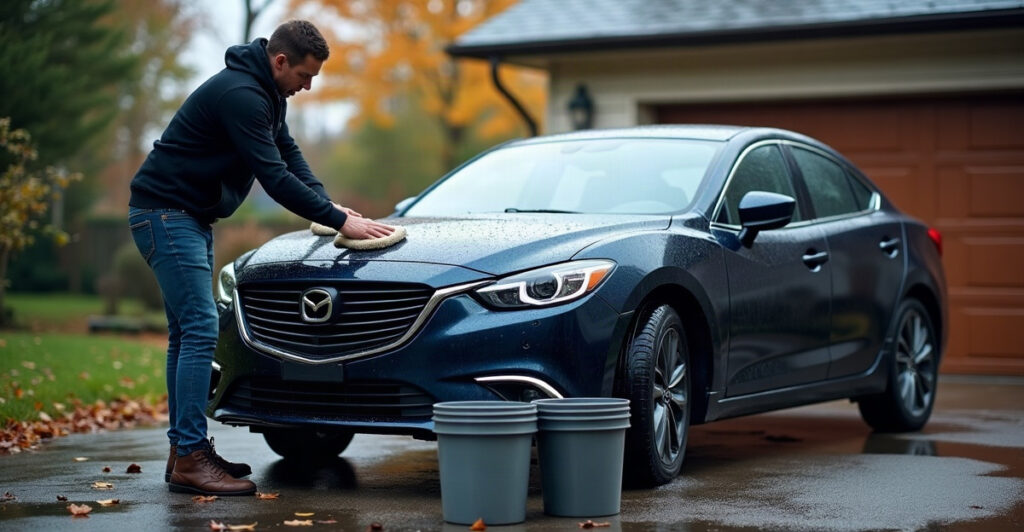
- Use pH-appropriate automotive wash products, clean microfiber towels, and safe wash methods.
- Avoid abrasive brushes, dirty towels, and poorly maintained automatic car washes when possible.
- Dry the vehicle thoroughly for better hard-water spot prevention.
- Inspect protection performance periodically and schedule maintenance or decontamination when needed.
Wheel protection, headlight protection, and trim care all work better with regular cleaning than with neglect followed by aggressive correction. If we are unsure whether paint correction, ceramic coating, PPF, or a combination best fits the vehicle, we can schedule a professional paint-condition assessment based on how the vehicle is driven, stored, and maintained.