How to Clean Ceramic Coating on Your Car the Right Way?
We clean ceramic-coated vehicles with regular, gentle washes that remove road film, minerals, and fresh contaminants before they bond to the surface. We use a cool, shaded wash area, pH-neutral shampoo, clean microfiber tools, and prompt drying to preserve gloss and water-repelling performance.
Key Takeaways
- Ceramic coating simplifies washing, but we still follow a regular care routine to prevent contamination, water spots, and surface buildup.
- We pre-rinse thoroughly before contact washing, then use clean microfiber mitts and techniques that keep grit away from the paint.
- We choose pH-neutral, wax-free shampoo and avoid household cleaners, abrasive tools, and products that leave heavy residue.
- We dry the vehicle immediately with clean microfiber towels, a blower, or filtered air to prevent mineral spots, especially with hard water.
- We remove bird droppings, bugs, sap, salt, and road grime quickly, then contact a professional for persistent stains or weaker water behavior.
Ceramic Coating Care: What It Does and Still Needs
Ceramic-coated vehicles still need routine washing. A quality coating helps dirt release more easily, improves gloss, and reduces the aggressive cleaning often needed on unprotected paint.
Ceramic coating is a sacrificial protective layer, not armor or paint protection film. It will not make paint scratch-proof, maintenance-free, fully waterproof, or immune to road film, water spots, chemical staining, bug residue, bird droppings, tree sap, and other contamination. Understanding what ceramic coating does helps set realistic expectations from the start.
The key to how to clean ceramic coating is simple: remove contamination before it bonds to the surface, and use products and tools that will not add scratches or leave residue. Water behavior can improve with a coating, but dirt and minerals can still build up and reduce beading or sheeting.
Care requirements vary by coating type, age, condition, manufacturer, and any topper or maintenance product applied afterward. We always recommend following the coating manufacturer’s instructions and the installer’s aftercare guidance if it differs from general washing advice. For new installations, proper curing matters before the first wash. Review ceramic coating cure time and when to wash after coating before exposing fresh protection to water or shampoo.
The Safe Step-by-Step Wash Process
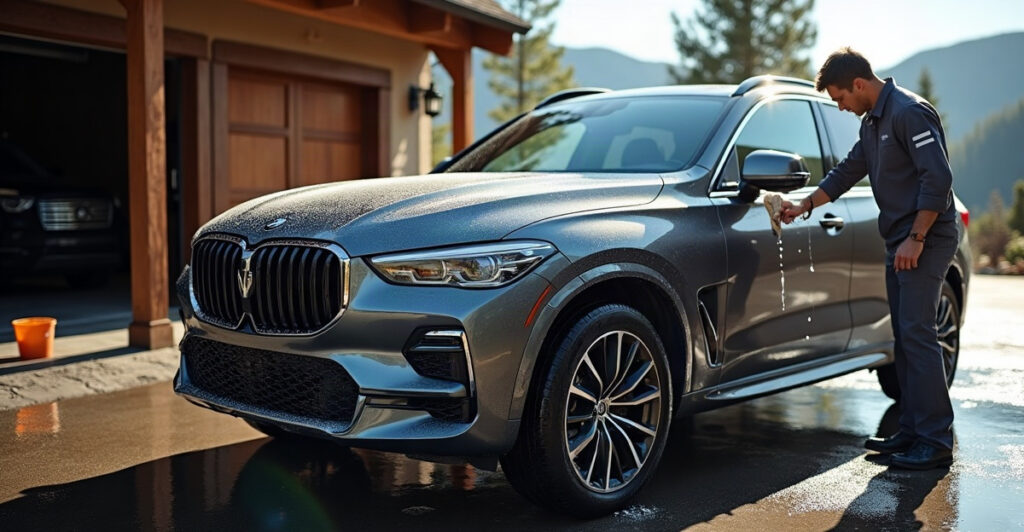
Park in a shaded, cool area whenever possible. Hot paint and direct sun can dry water and shampoo too quickly, leaving mineral spots or residue behind.
Start with a thorough pre-rinse. Remove loose dust, mud, road salt, grit, and traffic film before touching the paint. This step matters because rubbing abrasive debris across the surface can create fine scratches in the coating and paint.
Use a pH-neutral, wax-free, residue-light car shampoo made for coated vehicles. A pH-neutral shampoo is neither strongly acidic nor strongly alkaline. It cleans without relying on harsh chemistry that can affect the coating’s water behavior or leave unnecessary buildup.
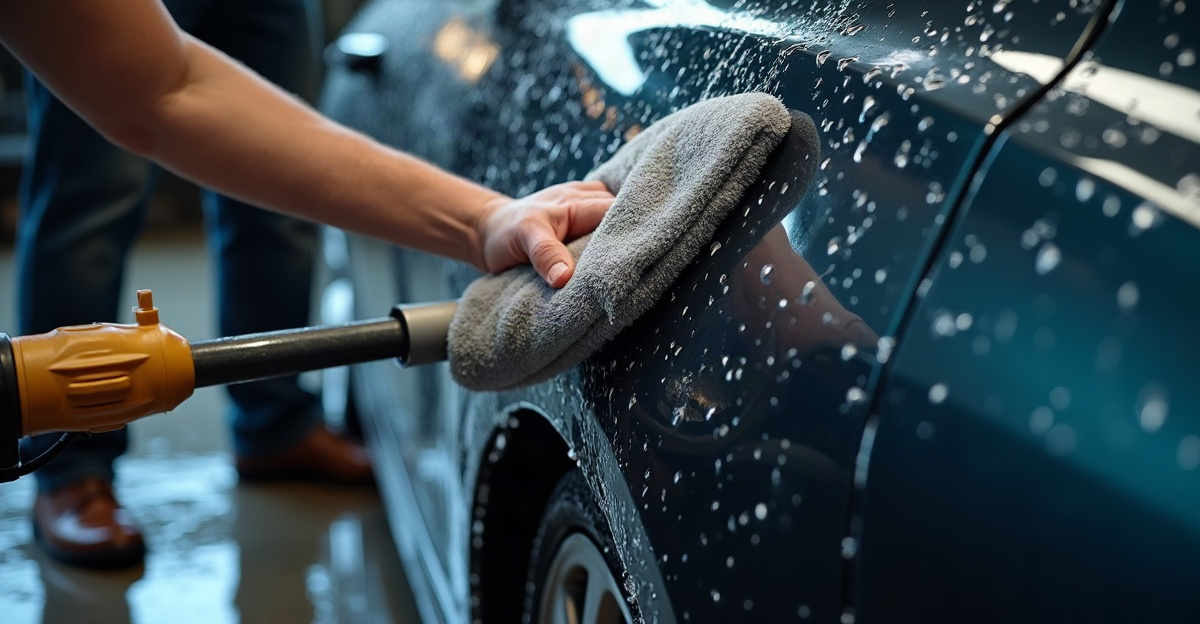
Wash with clean microfiber mitts and a two-bucket method with grit guards, or use another proven wash process that prevents grit from returning to the paint. Work from the top down, one section at a time. Keep wheels, lower panels, rocker areas, and other heavily soiled sections separate from cleaner painted surfaces.
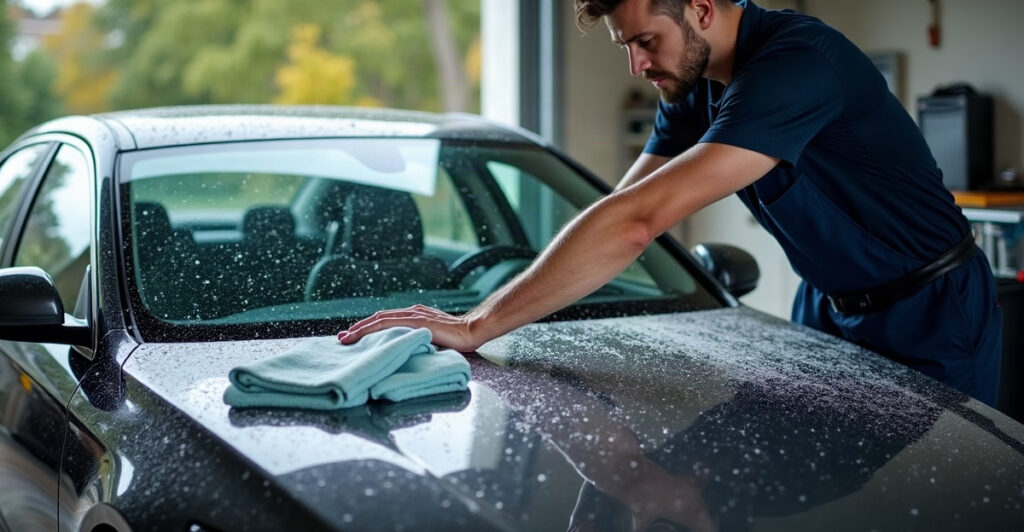
Rinse each section thoroughly before shampoo dries. Then dry the vehicle right away with clean, high-quality microfiber drying towels, a dedicated vehicle blower, or filtered air. Dab or glide towels gently rather than rubbing hard across the paint.
A careful hand wash remains the preferred method for how to clean a car with ceramic coating. It gives us the most control over water pressure, wash media, products, and contamination removal. For complete long-term guidance, see our ceramic coating maintenance guide.
Tools and Products That Protect the Coating
The right equipment keeps the wash process simple and consistent. We recommend using:
- pH-neutral shampoo
- Clean microfiber wash mitts
- Two wash buckets with grit guards
- Separate wheel brushes and wheel towels
- Absorbent microfiber drying towels
A drying blower or filtered-air dryer can help remove water from mirrors, emblems, trim, wheel barrels, and panel gaps. This reduces drips that can leave spots after the vehicle appears dry.
Use ceramic-coating-compatible water-spot removers or maintenance products only when the surface condition calls for them. Follow product directions closely. “Ceramic-safe” is a marketing term, not a guarantee that a product is necessary or compatible with every coating. Product labels, coating manufacturer guidance, and installer recommendations should guide the decision.
A maintenance spray or ceramic booster can be useful in some cases, but every coated vehicle does not need one after every wash. Using extra products without a reason can create residue, mask water behavior, and attract dirt. Consistent washing with good shampoo and clean towels usually delivers better long-term results than constantly layering products.
Drying, Water Spots, and Contamination Removal
Drying is especially important in Eastern Idaho and Western Wyoming. Hard water and mineral-heavy water can leave spots, while sun and wind can dry rinse water onto panels before the wash is complete. Do not allow rinse water to dry naturally on the vehicle.
Use clean towels and filtered or deionized water where available. Remove bird droppings, bug splatter, tree sap, fuel spills, road salt, road chemicals, and fresh grime as soon as practical. Ceramic coating provides a buffer, but these contaminants can still stain or etch surfaces if they remain too long.
Keeping a clean microfiber towel and coating-safe quick cleaner or rinseless wash solution in the vehicle helps with fresh spot cleaning. Never wipe dry dust, mud, or grit across paint. Rinse first, or use enough lubrication to lift contamination safely from the surface.
Reduced beading or sheeting does not automatically mean a coating has failed. Traffic film, mineral deposits, embedded contamination, and residue can clog the coating surface and reduce its hydrophobic behavior. Start with a thorough wash and a coating-appropriate decontamination process before assuming replacement is necessary.
If water behavior does not improve, or if the paint has visible staining, oxidation, or damage, professional inspection can prevent unnecessary product use. Some situations call for paint correction services before coating maintenance products can perform as expected.
What to Avoid, Including Automatic Car Washes
Avoid household dish soap and household cleaners. They may leave residue or use stronger chemistry than coated paint needs. Dirty sponges, old towels, stiff brushes, abrasive pads, and neglected wash mitts should also stay away from painted surfaces. These tools can create swirl marks and fine scratches.
Brush-style automatic tunnel washes are a poor choice for ceramic-coated paint. Their brushes often hold dirt and can drag contamination across the vehicle. Touchless washes can serve as a short-term option when hand washing is not possible, especially after exposure to salt, slush, or mud. Still, some touchless wash systems use stronger chemicals that can leave residue or affect water behavior over time.
Avoid strong degreasers and acidic or alkaline cleaners unless the product is approved for the specific surface and used correctly. Abrasive polishes, compounds, and clay products also require care. They can alter or remove parts of the coating, depending on the product and coating condition.
Wax-heavy, oily, or residue-heavy products can temporarily hide poor water behavior rather than correct the cause. They may also attract dirt. For lasting protection, focus on proper washing and use maintenance products only when the coating needs them.
Pressure washers can work well for pre-rinsing if used carefully. Follow the pressure washer and coating manufacturer’s instructions, keep a sensible distance from the paint, and avoid directing high pressure at damaged edges, loose trim, decals, or vulnerable areas. Pressure alone does not replace safe contact washing.
A Simple Maintenance Schedule for Local Driving Conditions
Follow this practical ceramic coating maintenance schedule based on local weather, driving habits, and contamination exposure:
- Weekly or as needed: Remove bird droppings, bugs, sap, and fresh spills safely.
- Every one to two weeks: Complete a gentle hand wash, depending on weather, driving habits, and whether the vehicle stays indoors or outdoors.
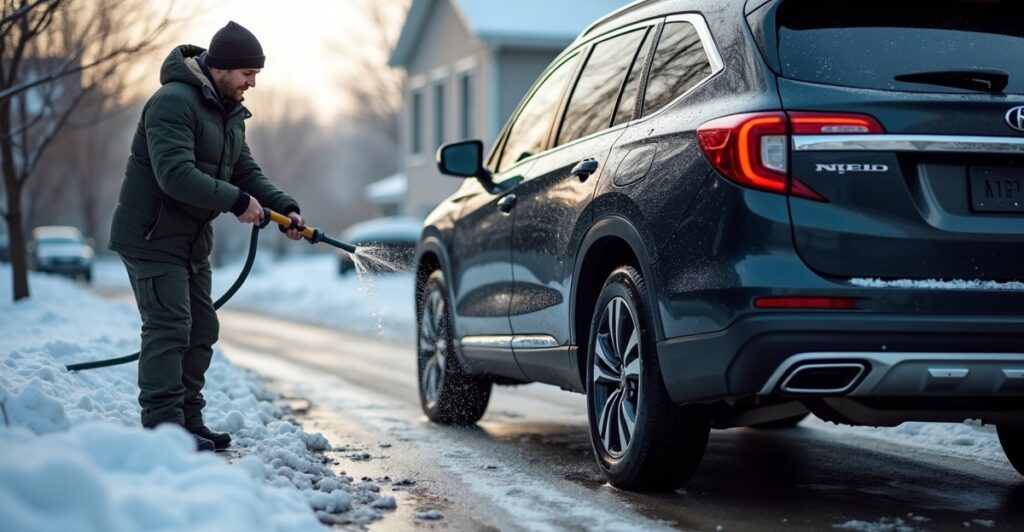
- After harsh conditions: Rinse promptly after winter storms, road brine, off-road use, mud, wildfire ash, long highway trips, or outdoor recreation.
- Every few months: Inspect for mineral spots, embedded contamination, reduced water behavior, and areas that no longer clean easily.
Winter salt and brine deserve extra attention because they collect in wheel wells, lower panels, seams, and undercarriage areas. Our guide to winter vehicle protection explains why regular cleaning matters through the cold season.
Consistent, gentle washing matters far more than an overly complicated detailing routine. Professional help can make sense for persistent water spotting, bonded contamination, visible staining, uncertainty about coating condition, or aftercare questions.
We provide auto ceramic coating services for cars and can also protect larger vehicles through our truck and SUV coating service. With proper care, a coating can continue making wash days easier throughout its expected service life. Learn more about ceramic coating lifespan and plan maintenance around real driving conditions.