Car Paint Etching: What Causes It and How to Fix It?
Car paint etching develops when acidic contaminants, minerals, or organic residue sit on a vehicle long enough to damage the clear coat. It can leave dull spots, rings, or stains that washing won’t remove. Safe washing and careful inspection help us identify removable contamination, correctable etching, or deeper damage that needs refinishing.
Key Takeaways
- Bird droppings, bug splatter, tree sap, hard-water spots, industrial fallout, and road grime can etch paint. Hot panels and long exposure increase the risk.
- If a mark remains after a gentle, pH-balanced wash and complete drying, etching may have damaged the clear coat instead of sitting on the surface.
- Light paint etching can improve with controlled polishing or professional paint correction. Deep damage may require refinishing.
- Avoid harsh cleaners, abrasive pads, aggressive rubbing compounds, and untrained machine polishing. These methods can scratch or thin the clear coat.
- Ceramic coatings can’t repair existing etching. However, they can improve washability and make maintenance easier after we correct the paint.
What Car Paint Etching Is and What to Do First
Car paint etching occurs when contaminants or acidic or mineral residues remain on a vehicle long enough to alter or mark the clear-coat surface. Surface contamination sits on top of the paint, while etching in car paint has changed the clear coat itself.
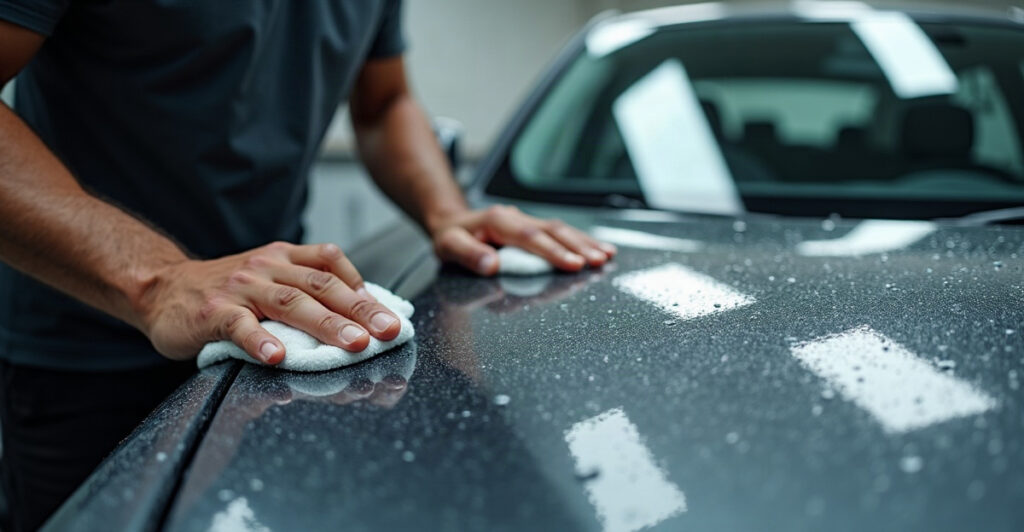
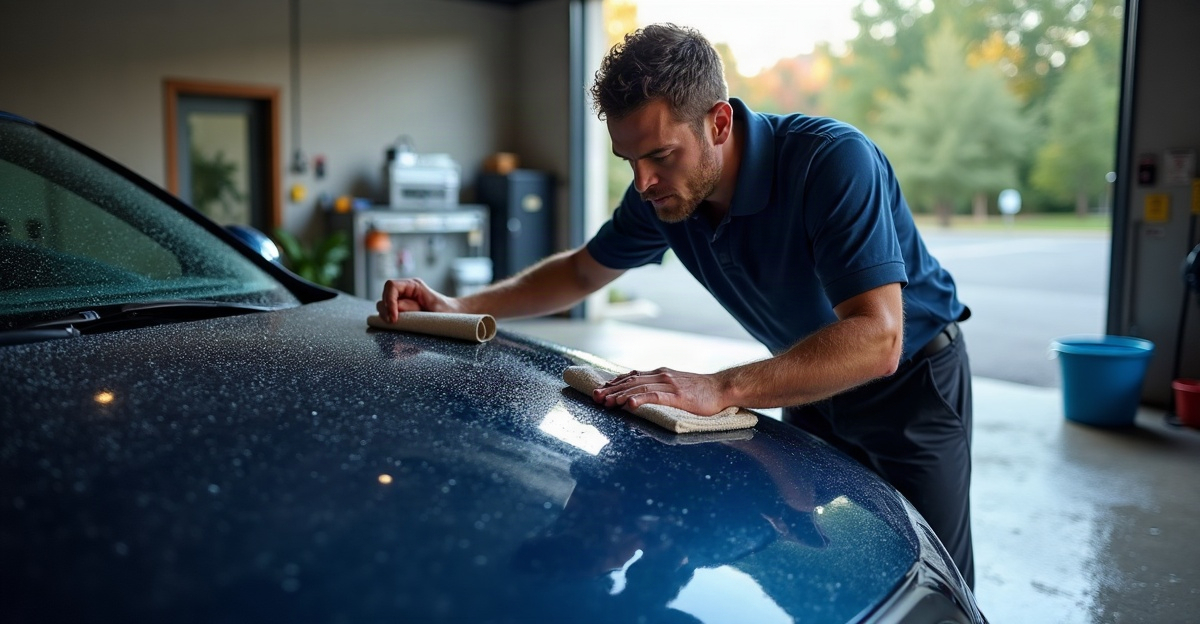
Start with a gentle, pH-balanced automotive wash. Dry the area fully with clean microfiber towels so leftover minerals do not create additional marks.
If the mark disappears, it was likely surface contamination. If it remains after a proper wash, it may be etching on car paint or another defect that needs closer inspection.
Some car paint etching can improve through polishing or professional paint correction. Severe or long-standing damage can extend beyond the clear coat, and refinishing may be the only way to achieve a complete repair. We inspect the condition before recommending any service, since unnecessary polishing can remove clear coat without solving the problem.
How to Tell Etching From Water Spots, Sap, Scratches, and Other Defects
Etching may appear as dull spots, rings, outlines, staining, roughness, or water-spot-like marks that stay behind after washing. Appearance alone does not confirm the cause. Water spots, mineral deposits, sap residue, scratches, oxidation, rock chips, and clear-coat failure can look similar but require different repairs.
Etching vs. Contamination vs. Other Paint Defects
| Condition | What It Means | Likely Remedy |
|---|---|---|
| Residue sitting on paint | Material remains on the surface. | Safe washing or chemical decontamination may remove it. |
| Mineral deposits or water spots | Minerals remain after water dries. They may sit on the surface or may have etched the clear coat. | Surface deposits may clean off. Etched marks may need polishing or correction. |
| Clear-coat etching | A mark or shallow depression where contaminants altered the clear-coat surface. | Polishing or paint correction may help if the damage is not too deep. |
| Scratches and swirls | Physical abrasion marks in the clear coat. | Polishing may reduce or remove them, depending on depth. |
| Oxidation | Faded, chalky, or dull paint from prolonged exposure. | Correction depends on the condition of the paint. Read more about car paint fading and repair options. |
| Rock chips | Paint is missing from impact damage. | Touch-up or repainting is generally needed. Polishing will not replace missing paint. |
| Clear-coat failure | Peeling, cracking, or widespread deterioration. | Refinishing is required. |
| Sap residue | Sticky or raised organic material on the surface. | It may be removable, though extended exposure can cause etching. |
A remaining mark that feels smooth may respond to light polishing or paint correction. A mark that looks dull, textured, deep, discolored, or unchanged after cleaning needs a professional assessment.
We do not recommend fingernail tests, aggressive rubbing, or abrasives to diagnose a defect. Those methods can add scratches and make the original damage harder to assess. A proper evaluation includes washing and decontaminating the panel, inspecting it under correct lighting, checking the paint condition, and determining whether correction can be done safely.
What Causes Car Paint Etching
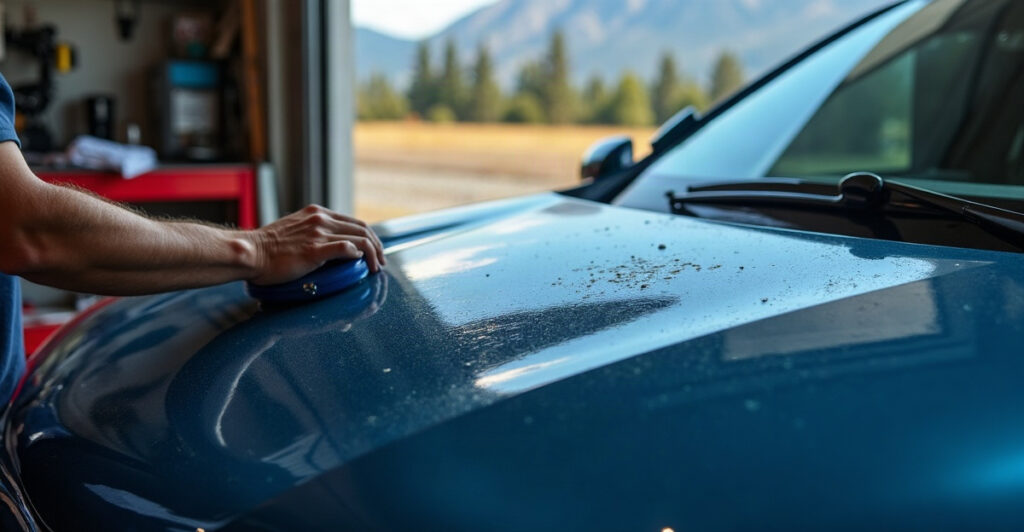
Bird droppings, bug splatter, tree sap, hard-water spots, industrial fallout, road grime, and airborne contaminants can all leave marks when they remain on paint. Many contain acidic compounds, minerals, or organic material that can react with or stain the clear coat over time.
Heat and direct sunlight often make the damage worse. A hot panel can speed up drying and allow contaminants to sit longer in concentrated form. Long dwell times, infrequent washing, outdoor storage, hard water, and allowing water to dry on hot panels can also increase the chance of etching.
Vehicles in Eastern Idaho, Western Wyoming, and surrounding areas often face extra exposure from outdoor recreation, road travel, changing weather, dust, insects, hard water, and extended outdoor parking. These conditions can increase exposure to contaminants and raise the likelihood or severity of etching, though they do not always cause damage.
Repair Options: From Safe Cleaning to Paint Correction and Refinishing
The right repair depends on whether the material is still on the paint or has already altered the clear coat. We always start with the least aggressive option.
Decontamination removes bonded material from the paint surface before evaluation or polishing. Clay treatment may be appropriate in some cases, but it can add minor marring and often requires polishing afterward.
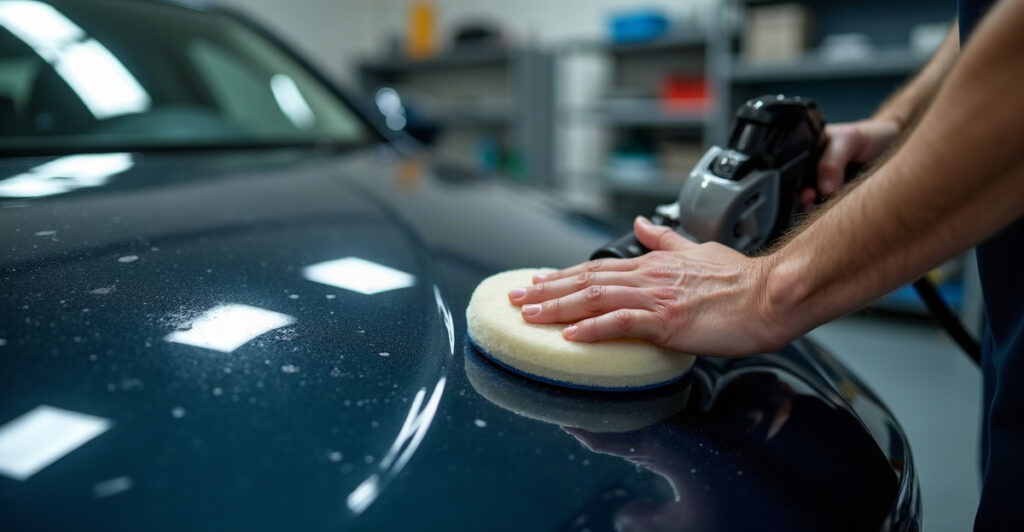
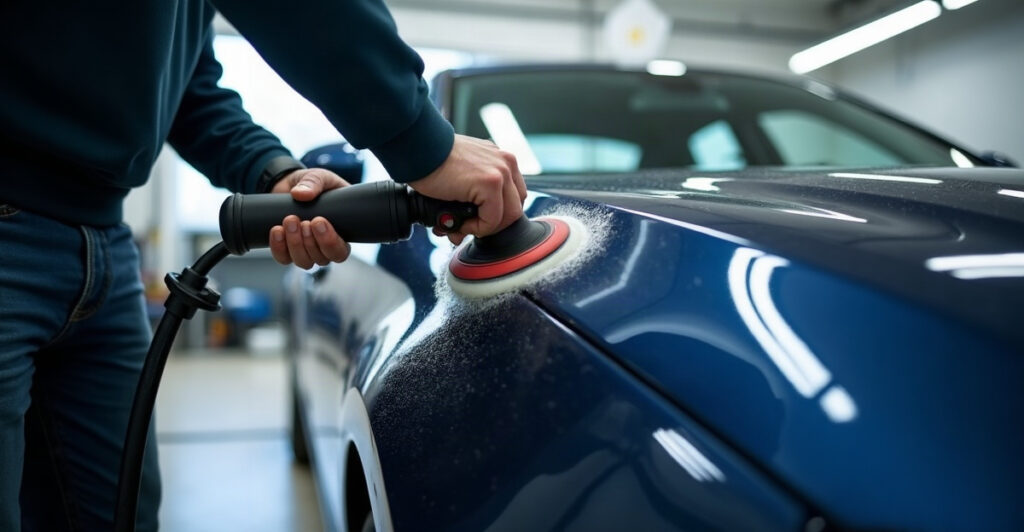
Polishing uses a mild abrasive to improve minor surface defects and restore clarity. Paint correction is a controlled polishing process that removes a very small amount of clear coat to level surrounding defects. Our professional paint correction process focuses on safe, measured improvement rather than chasing perfection at the expense of the paint.
Correction has limits. We cannot endlessly polish a vehicle. The safe amount of correction depends on paint thickness, previous polishing, vehicle age, panel condition, paint type, prior repairs, exposure time, and the vehicle’s overall condition. Deeper damage may remain visible after correction, or refinishing may be the only complete repair.
Methods to Avoid
Avoid the following methods before a proper inspection:
- Harsh household cleaners or strong acids
- Abrasive pads, magic erasers, and dry wiping
- Aggressive rubbing compounds
- Machine polishers without the right knowledge and tools
These methods can haze, scratch, or unnecessarily thin the clear coat. If marks remain after safe washing, professional evaluation is the smarter next step. Our guide to how paint correction works explains why controlled polishing matters.
Where Ceramic Coating Fits—and Where It Does Not
Ceramic coating does not remove existing etching, repair damaged clear coat, or conceal deep defects. If paint correction is feasible, we generally complete it before applying a coating.
Ceramic coating and paint etching are often misunderstood. A quality coating can improve washability and add chemical resistance, but it does not make paint invulnerable to bird droppings, bugs, sap, hard-water deposits, or other contaminants. Prompt removal still matters, even on coated vehicles.
After the paint is corrected and ready, an auto ceramic coating can support easier maintenance and add another layer of clear-coat protection. It works as a maintenance and protection tool, not as a cure for existing car paint etching. For example, water can still leave marks if it dries on the surface, as explained in our article about water spots on ceramic coating.
How to Prevent Future Etching and When to Request an Inspection
Practical Prevention Steps
- Remove bird droppings, bugs, sap, and fresh water spots as soon as practical.
- Wash with pH-balanced automotive products and clean microfiber towels.
- Avoid washing or allowing water to dry on hot panels when possible.
- Dry the vehicle thoroughly after washing, especially in hard-water areas.
- Use covered parking, a garage, or shade when practical.
- Maintain coatings, sealants, or waxes according to product and installer guidance.
- Schedule periodic professional maintenance for high-value, heavily used, or outdoor-stored vehicles.
Can Car Paint Etching Be Removed?
Light surface etching may improve or disappear with polishing. Results depend on the depth of the damage and the remaining clear coat.
Are Bird Droppings Permanent on Car Paint?
They can become permanent if they sit long enough to etch or stain the clear coat. Quick, safe removal gives the best chance of avoiding damage.
Can Water Spots Etch Clear Coat?
Yes. Mineral deposits may sit on the surface at first, but extended exposure can lead to etched water spots.
Will Ceramic Coating Fix Etching on Car Paint?
No. Ceramic coating does not repair existing damage. Correction should happen before coating if the paint condition allows it.
Does Paint Correction Remove Etching?
Paint correction may remove or reduce correctable clear-coat etching. Deep marks may remain visible, even after improvement.
When Does Etched Paint Need Repainting?
Repainting may be necessary when the damage extends too deeply into the clear coat or reaches the color coat, or when clear-coat failure is present.
Can You Remove Car Paint Etching Yourself?
A careful wash may remove surface contamination. Avoid aggressive DIY polishing or harsh chemicals if the mark remains, since they can worsen the finish.
If marks remain after a careful wash, request a professional paint inspection or consultation. We can determine whether the issue is contamination, correctable clear-coat etching, or damage that requires refinishing.